
BDA/ERCES Systems: Building Code Requirements & What’s Required for Your Facility in California
Modern building materials designed to improve energy efficiency, security, and structural performance—such as reinforced concrete, structural steel, and Low-E glass—can significantly reduce emergency responder radio coverage and emergency communication capabilities inside a structure. This can create communication dead zones and dead spots that affect communication for first responders during fire incidents, medical emergencies, evacuations, and other critical events.
To address this issue, many California jurisdictions may require Emergency Responder Radio Coverage Systems (ERRCS), commonly referred to as BDA systems or ERCES solutions, in buildings where public safety radio coverage does not meet adopted fire code and building code requirements. These systems help ensure that emergency responders can communicate effectively using two-way radio systems throughout the building during emergency operations.
Understanding when a BDA system may be required, how code compliance is verified, and the ongoing maintenance responsibilities can help facility owners avoid project delays and maintain compliance with local regulations.
What Is an ERCES/BDA System?
An Emergency Responder Communication Enhancement System (ERCES), also commonly referred to as an Emergency Responder Radio Coverage System (ERRCS) or a BDA system, is a life-safety communication system designed to improve in-building radio coverage for emergency responders in areas where radio signal strength is insufficient due to building construction, size, layout, or other factors affecting radio frequency (RF) propagation.
By extending the reach of the local public safety radio network inside a structure, an ERCES helps ensure seamless communication between firefighters, law enforcement personnel, emergency medical personnel, and other first responders operating within a building.
A typical ERCES or BDA system may include:
- A Bi-Directional Amplifier (BDA) that helps amplify incoming and outgoing radio signals
- A donor antenna that communicates with the local public safety radio system
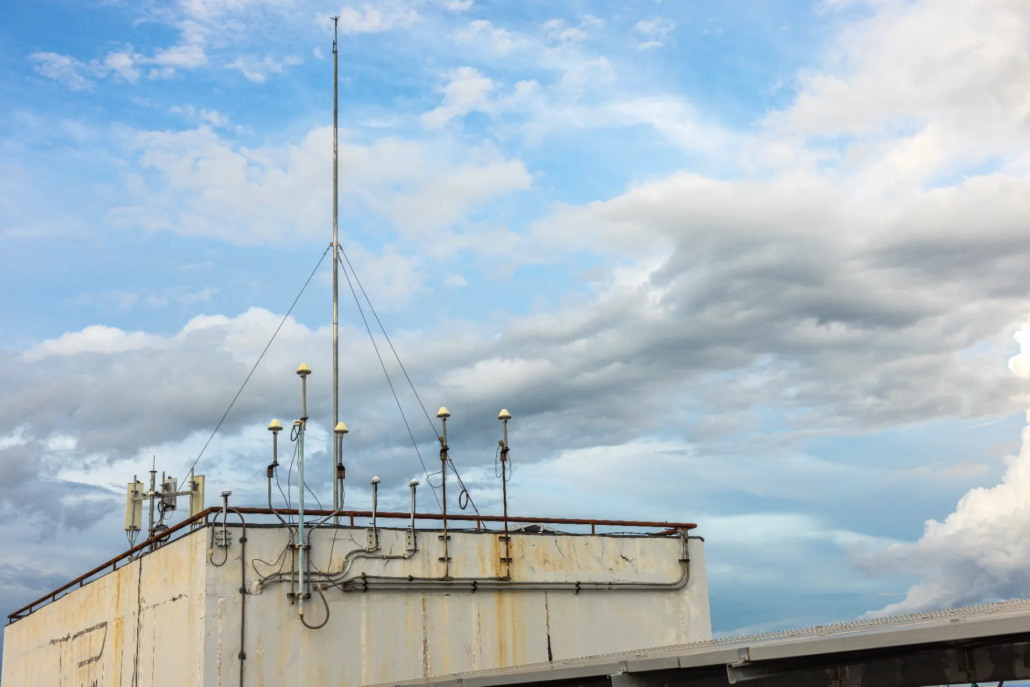
- A Distributed Antenna System (DAS) or antenna system that distributes signal coverage throughout the building
- Dedicated backup power sources
- System monitoring and supervisory equipment
- Fire-rated protection for certain components of a BDA system, pathways, and equipment rooms when required by the AHJ
Together, these components work to improve in-building emergency communications and support system reliability where weak or nonexistent radio coverage exists.
The specific frequencies, radio system parameters, equipment requirements, and performance criteria are generally determined by the Authority Having Jurisdiction (AHJ), which may include the local fire department, fire marshal, communications authority, or regional public safety communications agency.
California Code Requirements for Emergency Responder Radio Coverage
In California, Emergency Responder Radio Coverage Systems (ERRCS), commonly referred to as BDA systems or ERCES, are generally regulated under California Fire Code (CFC) Section 510, as adopted by the local jurisdiction and enforced by the Authority Having Jurisdiction (AHJ). Depending on the project, related provisions of the California Building Code (CBC) and locally adopted amendments may also apply.
The California Fire Code includes provisions intended to support reliable communication for emergency responders when a building cannot provide adequate signal coverage from the local public safety radio system. California Fire Code requirements are based on California’s adopted building and fire codes, which are derived from the International Fire Code (IFC) with state and local amendments. Some jurisdictions also reference applicable NFPA standards where adopted by the AHJ.
When testing identifies radio coverage deficiencies or communication dead zones throughout the building, the AHJ may require BDA installation or another approved radio enhancement solution to improve emergency responder communication.
While the California Fire Code establishes the framework for emergency responder radio coverage, implementation requirements often vary by jurisdiction. Local fire departments, fire marshals, and public safety radio system operators may adopt additional policies, technical standards, testing procedures, permitting requirements, and acceptance criteria. Many jurisdictions also reference provisions found in the International Fire Code (IFC) as incorporated into California’s adopted codes.
Depending on the jurisdiction, compliance may involve:
- California Fire Code requirements adopted by the local jurisdiction
- California Building Code (CBC) provisions where applicable
- Local fire code amendments and municipal ordinances
- AHJ-specific ERCES design and installation requirements
- Requirements established by the public safety radio system owner or operator
- Radio frequency coverage testing and acceptance procedures approved by the AHJ
- Inspection, maintenance, and periodic testing requirements
- Documentation and code compliance verification
Because emergency responder communication enhancement requirements can differ significantly between California jurisdictions, building owners, developers, architects, and contractors should engage the AHJ and the local public safety communications authority as early as possible during project planning and design.
When Is an ERCES System Required?
In California, an ERCES is generally required when emergency responder radio coverage testing demonstrates that radio signals within a building fail to meet locally adopted requirements.
The determination is typically made through radio frequency testing conducted in accordance with the requirements of the local jurisdiction and public safety communications authority. If testing shows that radio signal strength is insufficient or that communication dead zones exist in required coverage areas, the AHJ may require a BDA system installation to improve communication and enhance safety.
The need for a BDA solution is not based solely on occupancy classification. However, radio coverage challenges are more commonly encountered in:
- High-rise buildings
- Hospitals and healthcare facilities
- Hotels and hospitality properties
- Multifamily residential developments
- Office buildings
- Educational facilities
- Large commercial occupancies
- Warehouses and industrial facilities
- Mixed-use developments
- Underground parking structures and below-grade areas
Modern construction materials including reinforced concrete, structural steel, low-emissivity glass, and energy-efficient building assemblies can significantly reduce radio signal penetration. As a result, both new and existing buildings may experience emergency responder radio coverage deficiencies that require evaluation and corrective action.
How Compliance Is Typically Determined
Although procedures vary by jurisdiction, most California projects follow a similar process.
Preliminary Radio Coverage Evaluation
A qualified radio communications professional performs testing throughout the building to evaluate emergency responder radio signal strength, signal coverage, and overall communication system performance.
Testing procedures are generally based on the requirements established by the AHJ and the applicable code.
AHJ Review
Coverage results are submitted to the local authority for review. If the building demonstrates adequate emergency responder radio coverage, no additional communication enhancement system may be required. If coverage deficiencies are identified, the AHJ may require BDA installation.
System Design
The ERCES or BDA system is designed to satisfy the technical requirements established by the jurisdiction.
Design considerations often include:
- Required coverage areas
- Radio frequencies
- Signal strength requirements
- Equipment location requirements
- Fire-rated pathway requirements
- Backup power requirements
- Monitoring and supervisory requirements
- DAS and antenna system design requirements
Permitting and Installation
Plans are submitted for review and approval before installation. Depending on the jurisdiction, installing a BDA system may involve coordination among the building department, fire department, communications authority, and public safety radio system operator.
The cost of installing a BDA system varies significantly depending on building size, existing signal conditions, required DAS infrastructure, and local jurisdictional requirements.
Acceptance Testing
Before final approval, the system is typically subjected to acceptance testing witnessed by the AHJ or its designated representative.
Testing generally verifies:
- Required coverage levels
- System functionality
- Alarm and supervisory signals
- Backup power operation
- System performance
- Overall compliance with approved plans and local requirements
Inspection, Testing, and Ongoing Maintenance
One of the most common mistakes building owners make is assuming compliance ends after installation.
Emergency communication systems such as ERCES and BDA systems typically require ongoing inspection, maintenance, and periodic testing throughout the life of the building.
California jurisdictions may adopt different inspection intervals, reporting requirements, and testing procedures. Facility owners should always follow the requirements established by the adopted code, the local AHJ, and any applicable public safety communications authority.
Maintaining the system helps ensure optimal performance, system reliability, and reliable communication signals throughout the building during emergency incidents.
Why Early Planning Matters
ERCES requirements are often discovered late in construction, resulting in unexpected costs and project delays.
Early coordination among the project team can help identify potential radio coverage issues before construction is complete. This is particularly important for new construction projects where building materials may reduce public safety radio signals and create communication challenges for emergency responders.
Addressing emergency responder communication enhancement requirements during design is generally more efficient than retrofitting a completed building. Early planning also helps project teams determine whether a BDA system may be required and allows sufficient time for design review, permitting, testing, and approval.
Navigating California fire code amendments, RF testing, and complex BDA designs requires an expert partner. As a premier full-service life-safety provider, VFS Fire & Security Services delivers end-to-end expertise for your facility’s ERCES needs. From grid testing and installation to maintenance, VFS helps you avoid delays and keeps first responders connected.
Final Thoughts
In California, ERCES and BDA systems play an important role in supporting reliable in-building emergency communications for commercial, multifamily, institutional, and mixed-use buildings. These systems help first responders maintain radio communication during emergency operations when building construction limits public safety radio coverage.
Because local jurisdictions often adopt unique amendments and technical requirements, compliance standards can vary significantly. Requirements related to radio coverage, testing, permitting, maintenance, and documentation are ultimately determined by California-adopted codes and the local Authority Having Jurisdiction (AHJ). Engaging qualified professionals and coordinating with the AHJ early can help streamline compliance and avoid project delays.
Need Help Meeting California ERCES Requirements?
From radio coverage testing and ERCES/BDA system installation to inspections and maintenance, our experts provide end-to-end solutions to help your building achieve and maintain code compliance.


