
Fire Alarm Control Panel: Types, Functions & What Facility Managers Need to Know
For a facility manager, the safety of occupants and the protection of physical assets are the two highest priorities on any given day. While systems like HVAC or plumbing are noticed when they fail, fire safety systems must remain consistently reliable, even when operating in the background.
At the center of this vital infrastructure sits the fire alarm control panel (FACP). It is the decision-making hub that distinguishes a localized smoke event from a full-scale emergency. Understanding how this system thinks, communicates, and ages is not just a technical requirement; it is a fundamental part of modern risk management.
What is a Fire Alarm Control Panel?
The fire alarm control panel (FACP) is the central nervous system of your building’s fire strategy. It acts as a command center, receiving data from sensors and executing pre-programmed emergency logic. As a sophisticated computer, it is built to survive harsh conditions and provide actionable data during an emergency.
The Four Pillars of the FACP System
To manage your facility effectively, you must understand these core components:
- Central Processing Unit – Serving as the primary intelligence, the processor interprets all incoming signals. It differentiates between a “Trouble” event, indicating a technical fault, and a “Fire” event, confirming an active emergency.
- Redundant Power Supplies– Per NFPA standards, dedicated battery backups must sustain 24 hours of standby operation. These units must also provide a minimum of 5 minutes of alarm operation (or 15 minutes for voice evacuation systems) during a total building power outage.
- Primary Control Interface – This centralized keypad and display serves as the main interaction point for facility staff. It allows authorized personnel to acknowledge signals, silence audible notification appliances, and reset the system after an event.
- Remote Annunciator Panel – Often located at the main entrance, this unit mimics the status of the main panel. It enables first responders to map the emergency location instantly without needing to locate the building’s mechanical room.
Fire Alarm Panel Types: Finding the Right Fit for Your Facility
Choosing the right FACP is a critical operational and financial decision. While specialized configurations exist, most commercial systems fall into three primary categories based on how they process data.
1. Conventional Fire Alarm Control Panels
The Zone-Based Traditionalist
Conventional systems are the non-addressable, circuit-based solution of the fire safety world. They rely on physical electrical changes within circuits to trigger an alarm state.
How it Works: Devices (smoke detectors, heat sensors, pull stations) are connected on a shared circuit (zone), typically wired in parallel. When a device activates, it changes the electrical condition on that circuit, and the panel triggers an alarm for that entire zone.
Infrastructure Impact: These systems require significant amounts of wiring. Every zone must have its own dedicated run back to the control panel.
The “Search” Factor: Because the panel only indicates a zone (e.g., “Zone 4”), emergency responders must manually search that area to locate the exact device in alarm.
Best Used For: Small-footprint buildings (e.g., small retail, standalone restaurants) where a visual search of a zone can be completed quickly.
2. Addressable Fire Alarm Control Panels
The Point-Specific Intelligence
Addressable systems are the modern industry standard, functioning more like a digital communication network than a simple electrical circuit.
How it Works: Each device has a unique address (ID). The panel continuously “polls” devices on a Signaling Line Circuit (SLC) to monitor their status.
Operational Precision: In an emergency, the panel identifies the exact location (e.g., “3rd Floor, Storage Closet B, Smoke Detector”), eliminating guesswork.
Proactive Maintenance: These systems provide diagnostic data, such as sensitivity reports, helping identify maintenance needs before false alarms occur.
Wiring Efficiency: Multiple devices (often 100+, depending on manufacturer) can be connected on a single loop, reducing installation complexity and labor.
Best Used For: Large-scale facilities, high-rises, hospitals, and environments where accuracy and uptime are critical.
3. Hybrid (Combination) Fire Alarm Control Panels
The Flexible Bridge for Modernization
Hybrid panels combine conventional zone inputs with addressable SLC loops, enabling integration of legacy and modern devices.
How it Works: These panels support both traditional zone wiring and addressable communication, acting as a bridge between older and newer technologies.
Phased Upgrades: Facilities can retain existing conventional infrastructure in one area while deploying addressable devices in another, allowing gradual system modernization.
The “Middle Ground” Benefit: They provide a structured path toward full addressable implementation over time, helping distribute capital costs.
Best Used For: Large retrofits, aging buildings, or expanding facilities requiring a mix of old and new systems.
As an established leader in fire life safety, VFS Fire & Security Services specializes in helping facility managers navigate these choices, ensuring systems meet stringent NFPA 72 requirements and specific operational needs.
Critical Differences: At-a-Glance
| Feature | Conventional | Addressable | Hybrid (Combination) |
|---|---|---|---|
| Data Precision | Low (Zone level) | High (Device level) | Mixed |
| Wiring Labor | High (Dedicated runs) | Lower (Shared loops) | Moderate |
| False Alarm Management | Reactive | Proactive (Diagnostics) | Variable |
| Upfront Hardware Cost | Lowest | Highest | Moderate |
| Typical Upgrade Cycle | 10–15 years (limited scalability) | 15–20 years (depends on manufacturer support) | Varies (depends on upgrade strategy) |
Important Distinctions
When evaluating quotes, you may see these terms, which are features, not different panel types:
- Networked Systems: Multiple panels connected so events in one building are visible across others.
- Internet/Cellular Monitoring: Communication method between the panel and the central monitoring station.
- Voice Evacuation: Use of digital voice instructions instead of standard alarm tones to guide occupants during emergencies.
Final System Selection Guidance
If you are building for the future or managing a complex facility, addressable systems are widely considered the industry standard for safety, precision, and maintenance efficiency. If you are operating a smaller, straightforward facility with budget constraints, conventional systems remain a reliable, code-compliant option. Hybrid systems offer a practical transition strategy for modernizing existing infrastructure without a full system replacement.
Core Functions: What Does the Panel Actually Do?
A high-functioning fire alarm control panel is much more than a simple switch. It performs four critical tasks simultaneously and with absolute priority:
1. Constant Monitoring (Supervision)
The panel is never truly “off.” It is constantly “polling” every device and wire in the system. This is known as supervision. If a wire is cut, a battery fails, or a device is removed, the panel will emit a “Trouble” signal. This ensures that you are never under the false impression that your building is protected when it isn’t.
2. Notification & Evacuation
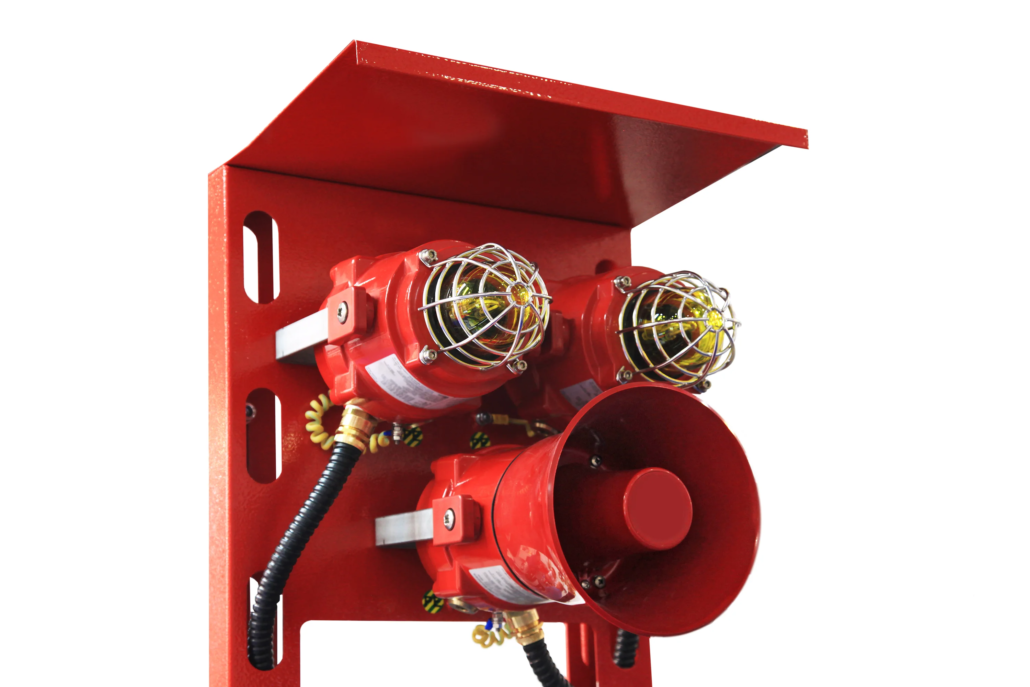
Once a confirmed fire signal is received, the panel activates the Notification Appliance Circuits (NAC). This includes horns, strobes, and, in many modern systems, voice evacuation. Voice evacuation is particularly critical in large facilities, as it provides clear, spoken instructions to occupants, reducing panic and improving evacuation times, while also guiding them toward safe exits and, where appropriate, access to first-response equipment such as fire extinguishers.
3. Building Systems Integration
This is where the FACP acts as the true “brain” of the building. To contain a fire and protect occupants, the panel can:
- HVAC Control: Shut down fans to prevent the spread of smoke or activate smoke purge systems.
- Elevator Recall: Signal elevators to return to the ground floor and park with doors open so they cannot be used by occupants during a fire.
- Door Control: Release magnetic door holders to close fire doors, compartmentalizing the building to slow the spread of flames and smoke.
4. Off-Site Communication
The panel is responsible for initiating emergency communication. It connects to a digital communicator that sends an immediate signal to a central monitoring station. This station then verifies the signal and dispatches the local fire department, often within seconds of the initial detection.
What Facility Managers Need to Know
Navigating the lifecycle of a life safety system requires a blend of regulatory knowledge and technical foresight.
1. The “Trouble” vs. “Alarm” Distinction
Facility managers must train their staff to understand the three distinct states of a fire alarm panel:
- Alarm: A life-threatening emergency is detected. Evacuate immediately.
- Trouble: A mechanical or electrical failure has occurred within the system itself (e.g., a “Ground Fault” or “Battery Fail”). This requires a service call but not an evacuation.
- Supervisory: A fire protection component is in the wrong position—most commonly, a fire sprinkler valve has been closed for maintenance and not reopened.
2. Life-Cycle Planning & Legacy Systems
Fire panels are not “set and forget” assets. Most have a reliable service life of 10 to 15 years. As technology advances, older panels become “legacy” products. This means the manufacturer no longer produces the proprietary circuit boards or display modules. If a 15-year-old panel suffers a power surge, you may find yourself in a “fire watch” situation, hiring security to walk the halls because you cannot source a replacement board. Proactive budgeting for a system migration is essential once your panel hits the 15-year mark.
3. Regulatory Compliance & The Paper Trail
In the eyes of the Fire Marshal and your insurance provider, if it isn’t documented, it didn’t happen. Under NFPA 72, you are required to maintain a log of all system activity. Ensure your service provider is performing:
- Annual Functional Testing: Testing every single smoke detector and pull station.
- Sensitivity Testing: (Every two years) Ensuring smoke detectors are triggering within their calibrated range.
- Battery Load Testing: Replacing batteries every 2–4 years, regardless of how they look.
4. Modernizing Your Communication
The biggest shift in the last five years has been the “sunset” of copper telephone lines (POTS). If your fire alarm control panel still dials out via a standard phone line, you are likely facing high costs and low reliability. Modern facilities are upgrading to Cellular or IP Communicators. These devices are faster, more secure, and often pay for themselves within 12 months by eliminating the monthly cost of dedicated phone lines.
Conclusion
Your fire alarm panel plays a critical role in keeping your facility safe and operational. By understanding the differences between an addressable fire alarm system and a conventional fire alarm system, and by staying on top of the FACP’s core functions, you can ensure your building remains a safe, compliant, and well-managed environment for years to come.
Don’t Let Outdated Systems Put You at Risk.
Modernize your fire alarm control panel for better accuracy, faster response, and lower maintenance costs. Talk to our team about future-ready solutions.
Contact Us

