
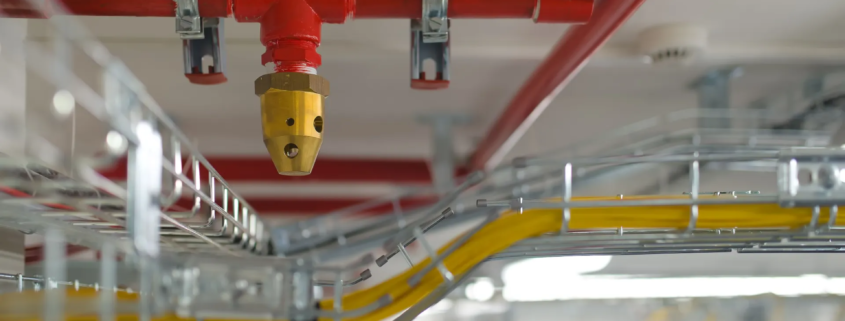
commercial fire sprinkler systems inspection technician

A fire sprinkler system is unique among commercial building equipment: it is engineered to remain dormant for decades, yet expected to operate with 100% reliability in a split-second emergency. That level of readiness only happens through rigorous, ongoing maintenance.

Compliance is strictly regulated. Across the United States, the governing standard is NFPA 25: Standard for the Inspection, Testing, and Maintenance of Water-Based Fire Protection Systems, published by the National Fire Protection Association. While NFPA 13 dictates system design and installation, NFPA 25 establishes the maintenance framework required to keep the system operational over the building’s lifespan.

California enforces the same NFPA 25 baseline but supplements it with additional state requirements. Building owners and managers must comply with NFPA 25 as adopted through the California Fire Code, as well as applicable provisions of Title 19 of the California Code of Regulations. Understanding how these requirements work together helps ensure compliance and avoid inspection deficiencies, citations, or other enforcement actions.

This guide breaks down what’s required nationally, what California adds on top, who holds ultimate legal responsibility, and the exact maintenance frequencies needed to stay compliant.

Who Is Responsible

NFPA 25, Chapter 4, places responsibility for inspection, testing, and maintenance (ITM) on the property owner — not the sprinkler contractor, not the inspector, and not the fire marshal.

The owner can hire a qualified contractor to do the work, and most do. But the obligation to make sure it happens on schedule, and to keep the records available on site, stays with ownership. If an inspection is missed, the owner is the one holding the violation.

In California, that ownership responsibility is reinforced through the California Fire Code, Title 19 of the California Code of Regulations, and other applicable state laws. While the Office of the State Fire Marshal establishes and oversees many statewide fire safety regulations, inspection and enforcement are typically carried out by the local Authority Having Jurisdiction (AHJ). In practice, enforcement is generally directed toward the property owner or other legally responsible party, such as a property manager, rather than the contractor performing the work.

The Authority Having Jurisdiction (AHJ) in California is defined broadly: the State Fire Marshal, or the chief of any city or county fire department or fire protection district (and their authorized representatives). Whichever office holds jurisdiction over your address is the one whose adopted rules you follow.

The Edition Problem: Why “the Latest NFPA 25” Isn’t Always Your Standard

NFPA publishes new editions of NFPA 25 on a three-year cycle, and no jurisdiction is automatically bound to the newest one. You are bound to whichever edition your governing code has adopted — often an edition or two behind current. This matters everywhere, and it matters double in California, because California has two adoption paths that can point at different editions:

  1. The California Fire Code (CFC) — Title 24, Part 9 of the California Code of Regulations. California updates it on a triennial cycle; the current version is the 2025 California Fire Code (built on the 2024 International Fire Code), effective statewide January 1, 2026. Local jurisdictions adopt it by reference, sometimes with their own amendments, and it references NFPA standards — including NFPA 25 — for maintenance.
  2. Title 19, CCR, Division 1, Chapter 5 — the OSFM’s dedicated rules for automatic fire extinguishing systems. Title 19 incorporates NFPA 25 by reference with California amendments (commonly called the “NFPA 25 California Edition”). Historically, the edition Title 19 adopts has lagged the newest NFPA release, and it modifies specific sections rather than adopting the standard wholesale.

The practical takeaway: the exact frequencies and trigger points that legally apply to your California building come from the California-amended edition your AHJ enforces — which may not match the newest NFPA 25 numbers you’ll find quoted online. Before building a maintenance schedule, confirm the adopted edition in writing with your AHJ or a licensed C-16 contractor. The national frequencies below are an accurate baseline and are correct for most of the country, but California’s amended edition should be verified against, not assumed.

Inspection, Testing, and Maintenance Are Three Different Things

These terms get used interchangeably, but NFPA 25 (and Title 19, which adopts its definitions with edits) treats them separately:

  • Inspection — a visual check that equipment is in place, undamaged, and in the correct condition.
  • Testing — a physical or operational check that a component actually performs, such as flowing water through an alarm device.
  • Maintenance — the corrective work: cleaning, lubricating, adjusting, or replacing parts, plus scheduled tasks such as exercising valves.

An inspection tells you something is wrong. Maintenance is what fixes it.

The schedule below reflects the NFPA 25 (2023) national framework. NFPA has since published a 2026 edition, but your local authority having jurisdiction (AHJ) enforces whichever edition it has adopted — often a cycle or two behind — so always confirm the adopted edition before scheduling. In California, the same tasks apply, but several carry extra state documentation and certification requirements under Title 19 CCR — flagged inline as [CA].

Weekly

  • Control valves that are not locked, sealed, or supervised — visual check that each valve is fully open, accessible, and undamaged. If a valve is locked or sealed, this drops to monthly; if it is electrically supervised, it drops to quarterly.
  • Dry, pre-action, and deluge system gauges — air and water pressure readings, where the system is not supervised. If supervised, this drops to monthly.
  • Diesel-driven fire pumps — no-flow (churn) run test.

A closed control valve is one of the most common reasons a sprinkler system fails during a fire. Although quick to perform, this inspection helps prevent one of the most common causes of sprinkler system failure during a fire.

Monthly

  • Wet pipe system gauges — confirm normal water pressure.
  • Locked or sealed control valves — visual position check.
  • Electric-motor-driven fire pumps — no-flow (churn) run test. Certain configurations (e.g., vertical turbine pumps, limited-service controllers, some high-rise installations) require weekly testing, so confirm with your contractor.

Quarterly

  • Electrically supervised control valves — visual position check.
  • Waterflow alarm devices — tested to confirm that water movement sends a signal to the fire alarm panel and triggers notification. Note: mechanical water-motor gongs are tested quarterly; vane-type and pressure-switch-type devices are tested semiannually.
  • Valve supervisory and supervisory signal devices — inspected and tested.
  • Fire department connections (FDC) — inspected for damage, missing caps, obstructions, and visible identification signage.
  • Main drain test — quarterly on at least one riser downstream where the sole water supply passes through a backflow preventer and/or pressure-reducing valve.

Quarterly items are almost entirely about the alarm and notification chain. A working sprinkler that nobody is alerted about still costs you evacuation time.

Semiannually

  • Vane-type and pressure-switch-type waterflow alarm devices — tested for signal and notification.

Annually

  • Sprinklers, piping, hangers, and bracing — full visual inspection from floor level, looking for corrosion, paint, loading, leaks, obstructions, and physical damage.
  • Main drain test — at each system riser; measures static and residual pressure to detect changes or obstructions in the water supply.
  • Control valves — operated through their full range of motion and returned to normal position.
  • Dry pipe valve trip test — partial (non-full) flow.
  • Antifreeze solutions — tested and adjusted before the onset of freezing weather.
  • Fire pump flow test — full performance test at no-flow (churn), rated, and peak (150%) flow.
  • Backflow preventer forward flow test — at system demand, including hose stream allowance.
  • Hydraulic design nameplate — verified as present and legible.

The annual visit is the most comprehensive of the routine cycles, and it is the record insurers and inspectors ask for first. In California, the annual service test must be performed by a C-16 licensed fire protection contractor, documented on State Fire Marshal (AES) forms, and those records retained on the premises for five years — versus one year under the national standard.

Every 3 Years

  • Dry pipe and pre-action systems — full flow trip test.

Every 5 Years

  • Internal pipe inspection — a sample of piping opened and examined for obstructing material, corrosion, and microbiologically influenced corrosion (MIC) on all system types, including wet.
  • Gauges — tested against a calibrated gauge or replaced.
  • Standpipe systems — flow test to verify the system still meets its required pressure and flow.
  • Alarm valves and their strainers, filters, and restriction orifices — internal inspection.
  • Pressure-reducing valves — full flow test.
  • Backflow preventers — internal inspection (in addition to the annual forward flow test).

California requires a Title 19 / NFPA 25 five-year certification, performed and certified by a C-16 licensed contractor, with results reported to the AHJ.

Long-Term: When Sprinkler Heads Must Be Tested or Replaced

Sprinklers themselves do not need annual replacement. Instead, NFPA 25 requires sample testing — a minimum of four sprinklers, or one percent of the sprinklers in the sample area, whichever is greater. Samples go to a qualified laboratory for visual inspection and a plunge test that measures response time. If one head fails, all similar heads in that area must be replaced.

Under the NFPA 25 (2023) national edition, the first sample test is triggered at:

Sprinkler type First test Then retest
Standard response 50 years Every 10 years
Standard response, after 75 years in service Every 5 years
Fast response (not ESFR or CMSA) 25 years Every 10 years
ESFR and CMSA 20 years Every 10 years
Dry sprinklers 20 years Every 10 years
Extra-high-temperature (325°F and above) 5 years Every 5 years
Harsh environment 5 years Every 5 years

Sprinklers manufactured before 1920 cannot be tested — they must be replaced.

California note: These trigger ages come from the 2023 national edition. Because California enforces sprinkler ITM through a California-amended edition of NFPA 25 that may differ from the 2023 numbers, confirm the exact head-testing thresholds that apply to your building against the edition your AHJ has adopted before relying on this table. The method (sample testing to a qualified lab) is consistent; the trigger years are what you should verify.

Separately, any sprinkler showing corrosion, paint, mechanical damage, loading, or the wrong temperature rating must be replaced, not cleaned. Painting a sprinkler head, even accidentally, is a defect.

Records Are Part of Compliance

NFPA 25 requires records of all ITM activity to be kept and made available to the AHJ. Each inspection needs its own documentation — date, findings, and the name of the person who performed it. Quarterly inspections cannot be bundled into one annual visit and backdated.

California tightens the paperwork rules noticeably:

  • ITM activity must be documented on the State Fire Marshal’s AES (Automatic Fire Extinguishing Systems) forms, not just any contractor’s form.
  • Those records must be retained for five years after the next scheduled ITM event — considerably longer than the one-year retention that applies under the national standard.
  • Many completed forms must be forwarded to the AHJ, not merely kept on site.
  • Work is also evidenced by a physical service tag on the system riser, and deficiency findings are commonly flagged with color-coded tags (a “yellow” or “red” tag signals problems that need correction).

This matters beyond code enforcement. After a loss, insurance carriers ask for maintenance records early. Gaps in the file give a carrier grounds to dispute a claim — and in California, a missing five-year certification or an incomplete AES file is exactly the kind of gap they look for.

Who Can Legally Do the Work in California

Nationally, NFPA 25 requires ITM to be performed by “qualified” personnel, but leaves licensing to the states. California is specific:

  • The contracting business needs a C-16 (Fire Protection) Contractor license, issued by the Contractors State License Board (CSLB).
  • Individuals working on fire sprinkler systems generally need a Fire Sprinkler Fitter certification issued through the Office of the State Fire Marshal.

If a vendor can’t produce a current C-16 and OSFM credentials, their inspection may not satisfy your AHJ — and you, the owner, remain on the hook.

Meeting California’s fire sprinkler maintenance requirements requires more than scheduling inspections—it also means working with qualified professionals who understand NFPA 25, the California Fire Code, and Title 19 documentation requirements. VFS Fire & Security Services provides commercial fire sprinkler inspection, testing, maintenance, repairs, certifications, and other fire protection services throughout California.

Conclusion

Fire sprinkler maintenance is a legal responsibility, not just a best practice. While NFPA 25 establishes the national inspection, testing, and maintenance framework, California also imposes additional requirements under the California Fire Code and Title 19. Staying compliant means following the adopted NFPA 25 edition, maintaining accurate records, correcting deficiencies promptly, and using qualified contractors. A proactive maintenance program helps protect life and property.

Stay Compliant. Stay Protected.

Schedule professional fire sprinkler inspection, testing, and maintenance to keep your system compliant with NFPA 25 and California regulations—and ready to perform when it matters most.

Contact Us

commercial fire sprinkler system inspection technician

A fire sprinkler system is the only part of your building that fights a fire automatically, around the clock, whether anyone is inside or not. It is also one of the most overlooked building systems until a leak or malfunction makes it impossible to ignore.

The good news is that properly maintained fire sprinkler systems are remarkably effective when they’re needed most. According to the National Fire Protection Association (NFPA), in structure fires large enough to activate them, sprinklers operated 92% of the time and controlled the fire in 97% of those cases. The bad news is buried in the same research: when a system did fail, the single most common reason was that it had been shut off before the fire ever started.

Most fire sprinkler system failures are not exotic engineering problems. They are maintenance problems, and most can be identified during routine inspections.

Here is what actually goes wrong, what can be repaired, what must be replaced, and when to stop troubleshooting and call a licensed technician.

How Fire Sprinklers Actually Work

Two myths need clearing up, because they drive a lot of bad decisions.

Myth 1: Smoke sets off sprinklers. It does not. Each sprinkler head contains a heat-sensitive element — a glass bulb filled with liquid, or a metal fusible link. That element only releases when the air at the ceiling reaches its rated temperature. Burnt toast will trip your fire alarm. It will not trip a sprinkler.

Myth 2: One head goes off and the whole building floods. Also false. Sprinklers activate individually, only where the heat is. NFPA data shows that in 77% of fires where sprinklers operated, exactly one sprinkler did the job.

This matters for repair work, because it explains why so many failures come down to small, local problems: a single painted head, one corroded section of pipe, one valve left closed.

Most commercial fire sprinkler systems fall into three types. Wet pipe systems hold water in the pipes at all times and are the most common. Dry pipe systems hold pressurized air or nitrogen instead, with water held back at a valve — used where freezing is a risk. Pre-action systems add a second trigger, typically a detection device, before water enters the pipe. Each system has its own common failure points and maintenance requirements.

What Causes Fire Sprinkler System Failures

1. A Closed Valve (The Number One Cause)

A control valve gets closed for a repair, a renovation, or a nuisance alarm — and never gets reopened. The system looks perfectly normal from the floor. It just has no water.

This is why NFPA 25, the Standard for the Inspection, Testing, and Maintenance of Water-Based Fire Protection Systems, requires control valves to be verified in the open position on a weekly or monthly cycle depending on whether they are sealed, locked, or electrically supervised. Supervised valves tied into the fire alarm panel are the strongest defense here, because closing one sets off a supervisory signal instead of silence.

2. Internal Corrosion and Pinhole Leaks

Corrosion is the quiet killer of fire sprinkler pipe. Where metal, moisture, and oxygen meet inside the pipe, rust forms. In some water supplies, bacteria accelerate the process — the industry calls this microbiologically influenced corrosion, or MIC.

The result is twofold. Pitting eats through the pipe wall and creates pinhole leaks. Meanwhile, corrosion deposits called tubercles build up inside the pipe, restricting flow and occasionally breaking loose to plug a sprinkler head.

Dry pipe and pre-action systems are the most vulnerable, because residual water sitting in a pipe full of compressed air is close to ideal conditions for corrosion. This is exactly why NFPA 25 requires an assessment of the internal condition of piping every five years — an inspection that gets deferred far more often than it should be. Many fire protection companies now recommend replacing supervisory air with nitrogen in dry systems, since removing oxygen slows corrosion dramatically.

Watch for these warning signs: repeated pinhole leaks, black or foul-smelling water during a drain test, rust staining after flow testing, or an air compressor on a dry system that runs constantly to hold pressure.

3. Freezing

Water expands as it freezes, and it will split a pipe or crack a fitting without warning until the thaw arrives — at which point you have an uncontrolled discharge. Unheated stairwells, loading docks, attics, parking structures, and exterior canopies are the usual trouble spots. Dry pipe systems are designed to prevent freezing, but they still require routine draining of low points and proper heating of the dry valve enclosure to function reliably.

4. Physical Damage

Forklift masts, scissor lifts, ladders, contractors hanging cable, and stacked inventory all can damage sprinkler heads and piping. A sheared head does more than fail — it discharges. On dry systems, a snapped fitting dumps air pressure and trips the valve.

Two rules prevent most of this: never hang anything from sprinkler pipe or heads, and install listed head guards in high-traffic areas like warehouses and loading zones.

5. Paint, Dust, and Blocked Coverage

A painter’s overspray on a glass bulb acts as thermal insulation and delays or prevents activation. Grease in a commercial kitchen, dust in a woodshop, and cobwebs in a storage area do the same thing — the industry term is a loaded sprinkler.

Coverage gets blocked from below, too. NFPA 13, the installation standard, requires a minimum of 18 inches of clearance below standard spray sprinkler deflectors. Stack pallets higher than that and the spray pattern breaks down. The sprinkler operates, and the water still does not reach the fire.

6. Water Supply and Pressure Problems

A system can be flawless from the riser up and still fail if the supply behind it has degraded. Municipal main work, a partially closed underground valve, a clogged backflow preventer, or a fire pump that has not been exercised will all quietly reduce available water pressure.

The annual main drain test exists to catch this. A technician measures static pressure, opens the main drain fully, then measures residual pressure before comparing the results with previous inspections and the original hydraulic design data. A meaningful drop means investigate now — not next year.

What Can Be Repaired, and What Must Be Replaced

This is where well-meaning maintenance staff get into trouble.

Sprinkler heads are never repaired. NFPA 25 is explicit: a sprinkler showing leakage, corrosion, paint, physical damage, loading, or incorrect orientation must be replaced. A glass bulb that has lost its liquid must be replaced. You do not clean paint off a head. You do not tighten a leaking sprinkler head to stop the drip — tightening can deform the seat and cause a full discharge. Cleaning dust off a lightly loaded head with compressed air is acceptable in some cases; scraping, solvents, and wire brushes never are.

Pipe repairs are legitimate — with a caveat. A localized fire sprinkler pipe repair is normal work. But a pinhole leak is usually a symptom, not the disease. If a technician is patching the third leak in two years, the honest recommendation is a corrosion analysis, not another patch.

Replacement heads must match. Same temperature rating, same response type, same orifice size, same finish, same manufacturer where required. Substituting a standard-response head into a fast-response design changes system performance. That is why NFPA 25 requires a spare sprinkler cabinet on site — at minimum 6 spares for systems under 300 sprinklers, 12 for 300 to 1,000, and 24 above that — plus the correct wrench for each type installed.

When to Call a Pro Immediately

Some situations are emergency fire sprinkler repair calls, not scheduled service:

  • Water is flowing, and there is no fire. Call your fire protection company and the fire department’s non-emergency line. Do not close the control valve unless a trained person is directing the shutdown.
  • A sprinkler head is leaking, dripping, or physically damaged.
  • Pipes are frozen, sagging, or visibly corroded.
  • The fire alarm panel shows a supervisory, trouble, or low-air condition that does not clear.
  • A main drain test shows a significant pressure drop from previous readings.
  • Any part of the system is out of service for any reason.

That last one carries a code obligation many owners miss. NFPA 25 Chapter 15 governs impairments. When a water-based fire protection system is out of service for more than 10 hours in a 24-hour period, the impairment coordinator must arrange an approved fire watch, evacuate the affected area, establish a temporary water supply, or implement an approved program controlling ignition sources. The impaired valve must be tagged, and the fire department, alarm monitoring company, and insurer notified. If the fire alarm system is also down, NFPA 72 sets a tighter four-hour threshold. Your local authority having jurisdiction (AHJ) may be stricter than either.

The Inspection Schedule That Prevents Most of This

Regular maintenance is far cheaper than emergency service. A typical NFPA 25 inspection and maintenance program includes the following. However, the exact requirements depend on the adopted NFPA edition and your Authority Having Jurisdiction (AHJ).

Frequency Typical Scope
Weekly / Monthly Control valve position, gauge readings (weekly on dry and pre-action, monthly on wet)
Quarterly Waterflow and supervisory alarm testing, fire department connections, main drain test where a backflow preventer is the sole supply
Annual Floor-level inspection of all sprinklers, pipe, fittings, hangers and bracing; main drain test; dry pipe valve trip test; fire pump flow test; spare sprinkler cabinet check
5-Year Internal pipe assessment for corrosion and obstruction; gauge testing or replacement; internal valve inspection
10-Year and Beyond Sample laboratory testing of sprinklers — dry sprinklers at 10 years, fast-response at 20 to 25 years depending on edition, standard-response at 50 years, then every 10 years thereafter

Weekly and monthly visual checks can often be done by trained in-house staff. Testing takes the system temporarily out of service and belongs to a licensed contractor.

Choosing a Fire Protection Company

Not every contractor offering fire sprinkler services has the necessary qualifications or experience. Ask for four things:

  1. State licensing and NICET-certified technicians. Sprinkler contracting is a licensed trade in most states.
  2. Written NFPA 25 documentation after every visit — deficiencies, corrections, and the inspector’s name. Your AHJ and insurer will ask.
  3. Full-service capability, from design and installation through inspection, testing, and repair, so one company owns the system’s history rather than three.
  4. Genuine emergency response. When a sprinkler leaks in the middle of the night, immediate service helps minimize water damage and system downtime.

A good technician tells you when a repair is a patch and when it is a real fix.

Choosing the right fire protection partner is just as important as following the right maintenance schedule. A qualified contractor should provide thorough NFPA 25 inspections, accurate documentation, timely repairs, and dependable emergency service. VFS Fire & Security Services delivers comprehensive fire sprinkler inspection, testing, maintenance, repair, and installation services, helping businesses keep their fire protection systems code-compliant, reliable, and ready to perform when they are needed most.

The Bottom Line

Fire sprinklers are among the most reliable life-safety systems ever built — but reliability is earned through inspection, testing, and maintenance, not assumed at installation. Closed valves, corroded pipe, painted heads, and blocked clearance are all preventable, and every one of them is visible to someone who knows where to look.

Follow a documented NFPA 25 maintenance schedule, correct deficiencies promptly, and schedule repairs with a licensed fire protection contractor before minor issues become major failures.

Contact Us

NFPA 25: The Complete Guide to Fire Sprinkler Inspection Frequencies in California

Fire sprinkler systems are a fundamental component of fire and life safety in commercial, industrial, and multi-family buildings. While proper installation establishes the foundation of protection, long-term reliability depends on consistent inspection, testing, and maintenance (ITM).

In California, fire sprinkler ITM requirements are regulated through the California Fire Code (Title 24, Part 9 of the California Code of Regulations), which adopts specific editions of NFPA 25, Standard for the Inspection, Testing, and Maintenance of Water-Based Fire Protection Systems, along with California state amendments and any locally adopted modifications. These requirements are enforced by the local Authority Having Jurisdiction (AHJ), typically a city fire department, fire prevention bureau, or county fire marshal.

Because enforcement practices, interpretation, and local amendments may vary between jurisdictions, compliance should always be verified with the applicable AHJ for the specific adopted code cycle and enforcement policies in that region.

Understanding Fire Sprinkler Inspection Requirements in California

California’s fire code framework requires that water-based fire protection systems be maintained in accordance with the California Fire Code (Title 24, Part 9 of the California Code of Regulations), which incorporates NFPA 25 for inspection, testing, and maintenance, as adopted for the applicable code cycle and as amended by the state and local jurisdictions.

This includes inspection, testing, and maintenance of water-based fire protection systems, including sprinkler system inspection, such as:

  • Wet pipe sprinkler systems
  • Dry pipe sprinkler systems
  • Pre-action systems
  • Deluge systems
  • Standpipe systems
  • Fire pumps (as part of water supply systems under NFPA 25)
  • Fire water storage tanks, control valves, and associated water supply components

While NFPA 25 establishes the technical baseline requirements for ongoing system care, local Authorities Having Jurisdiction (AHJs) may enforce additional administrative procedures, reporting formats, or local amendments depending on occupancy classification, risk category, and regional fire protection policies.

Why Inspection Frequencies Matter

A fire sprinkler system is an integrated network of mechanical, hydraulic, and supervisory components designed to operate as a single life-safety system during a fire event. Each component must remain in proper working condition to ensure overall system performance under emergency conditions.

Regular inspection, testing, and maintenance help identify potential deficiencies such as:

  • Corrosion or internal pipe degradation
  • Mechanical damage, leakage, or system impairment
  • Obstructions or restricted water flow within piping
  • Improperly closed, partially closed, or tampered control valves
  • System pressure irregularities or abnormal fluctuations
  • Faulty alarm devices or supervisory signal failures

Early identification of these conditions helps maintain system reliability and supports compliance with the California Fire Code, which adopts NFPA 25 requirements for ongoing inspection, testing, and maintenance of water-based fire protection systems.

Breakdown of Inspection and Testing Intervals

The following intervals are based on NFPA 25 as adopted by the California Fire Code for the applicable code cycle, and may be subject to local AHJ amendments.

Quarterly Inspection Requirements

Certain fire sprinkler system components are required to be inspected at quarterly intervals, depending on system configuration and device type, to help ensure ongoing readiness and operational reliability.

Components commonly subject to quarterly inspection include:

  • Fire Department Connections (FDCs)
  • Waterflow alarm devices
  • Supervisory signal devices associated with sprinkler system valves and system monitoring equipment

During these inspections, trained personnel verify accessibility, proper identification, physical condition, and operational readiness for emergency response use, ensuring that all required components are unobstructed and functional.

Other sprinkler system components are inspected at different intervals as defined by NFPA 25. For example, control valves are typically inspected on a weekly or monthly basis depending on supervision type, while fire pumps require weekly inspection and operational testing, along with periodic performance testing. Pressure-regulating devices and specialized system components may require quarterly, semiannual, or annual inspection and testing, depending on system design and configuration.

Annual Inspection and Testing Requirements

Annual inspection and testing activities provide a comprehensive evaluation of key fire sprinkler system components to help ensure continued operational reliability and code compliance.

Typical annual activities include:

  • Visual inspection of sprinkler heads for damage, corrosion, loading, or obstruction
  • Inspection of exposed piping for corrosion, leakage, or physical damage
  • Evaluation of pipe hangers, supports, and seismic bracing systems
  • Main drain testing to assess water supply performance and identify changes in system pressure conditions
  • Functional testing of system alarm devices, including waterflow alarms and supervisory signals, where applicable
  • General system condition review, including identification and documentation of deficiencies requiring corrective action

Main drain testing establishes a baseline measurement of water supply condition. Significant deviations from historical pressure readings may indicate changes in municipal supply conditions, partially closed valves, system impairments, or other hydraulic issues that could affect sprinkler system performance during activation.

Five-Year Inspection and Testing Requirements

Certain fire sprinkler system components are subject to extended-interval inspection, testing, and maintenance activities intended to assess conditions that are not fully verifiable through routine annual inspections.

These requirements apply to specific components and system conditions as defined by NFPA 25 and may be triggered by system age, configuration, performance history, or observed risk factors.

Typical five-year activities may include:

  • Replacement or testing of pressure gauges in accordance with NFPA 25 and manufacturer specifications
  • Internal inspection of piping systems where required by system type, inspection findings, or applicable NFPA 25 provisions
  • Obstruction assessment or investigation in systems where conditions such as water quality, corrosion potential, or prior performance issues indicate elevated risk
  • Evaluation, inspection, or servicing of selected system components as required under applicable NFPA 25 provisions for long-term system condition assessment

These extended-interval activities are intended to support early identification of internal system conditions such as corrosion, microbiologically influenced corrosion (MIC), sediment accumulation, and debris buildup. While these conditions may not be detectable during routine external inspections, they can impact system performance if not addressed in accordance with NFPA 25 requirements and applicable Authority Having Jurisdiction (AHJ) interpretations.

Additional Inspection Frequencies

Fire sprinkler systems require inspection, testing, and maintenance activities at varying intervals based on system type, component function, and supervisory requirements.

Weekly and Monthly Activities

Certain critical components require frequent monitoring, including:

  • Fire pumps, which require weekly inspection and no-flow operational testing in accordance with NFPA 25 requirements, with additional annual flow testing.
  • Control valves, which require weekly or monthly inspection depending on valve type, supervision method, and system configuration.
  • Water storage tanks, including monitoring of water level, temperature conditions, and external condition indicators.

System-Specific Testing Requirements

Some components require periodic testing based on system design and operational function, such as:

  • Dry pipe valve trip testing, typically conducted annually or as otherwise required based on system condition and NFPA 25 provisions.
  • Supervisory devices, including valve tamper switches and pressure monitoring devices, tested at intervals defined by NFPA 25 depending on device type and system design.
  • Special suppression or auxiliary system components, which must be tested and maintained according to system-specific NFPA 25 requirements.

Supplemental Requirements

Additional inspection, testing, or replacement intervals may apply based on:

  • Manufacturer installation and maintenance instructions.
  • System age, environmental exposure, and operating conditions.
  • Local Authority Having Jurisdiction (AHJ) amendments or enforcement requirements.

Documentation and Recordkeeping

NFPA 25, as adopted by the California Fire Code, requires that records of inspection, testing, and maintenance (ITM) activities for water-based fire protection systems be documented and maintained as part of the system’s compliance recordkeeping program.

Standard records typically include:

  • Date of inspection or test.
  • Type of ITM activity performed.
  • Test results, measurements, or observations where applicable.
  • Identified deficiencies, impairments, or system issues.
  • Corrective actions taken or required follow-up actions.
  • Identification of the technician and contractor performing the work.

These records must be maintained by the building owner in accordance with NFPA 25 requirements and applicable Authority Having Jurisdiction (AHJ) retention policies, and must be made available for review during inspections, audits, or compliance verification.

Who Can Perform Fire Sprinkler Inspections in California?

Fire sprinkler inspection, testing, and maintenance (ITM) must be performed by qualified personnel trained in applicable codes and standards, including NFPA 25 as adopted by the California Fire Code.

In California, many ITM activities—particularly testing, maintenance, repairs, and system modifications—are commonly performed by licensed fire protection contractors, typically holding a C-16 Fire Protection Contractor license issued by the California Contractors State License Board (CSLB), depending on the scope of work and regulatory requirements.

Some routine inspection activities may be performed by trained and qualified facility personnel where permitted by the Authority Having Jurisdiction (AHJ), provided they are competent in identifying system conditions and properly reporting deficiencies in accordance with applicable requirements.

Technicians may also hold certifications such as NICET, depending on job role, contractual requirements, or AHJ expectations, although such certifications are not universally mandated by California law.

Ultimately, building owners retain responsibility for ensuring that fire protection systems are properly maintained and that all required inspection, testing, and maintenance activities are completed in compliance with applicable codes and standards.

For building owners navigating California’s strict regulatory environment, VFS Fire & Security Services provides the professional oversight needed to maintain full compliance. By managing the complex timeline of weekly, quarterly, annual, and five-year NFPA 25 requirements, they ensure life-safety systems remain certified, dependable, and fully aligned with local fire marshal codes.

Maintaining Fire Sprinkler Compliance in California

Compliance with fire sprinkler system requirements is not achieved through a single inspection event. It is maintained through continuous adherence to inspection, testing, and maintenance (ITM) schedules defined in NFPA 25, as adopted and enforced through the California Fire Code (Title 24, Part 9) and implemented by local Authorities Having Jurisdiction (AHJs).

A compliant ITM program typically includes:

  • Scheduled inspections, testing, and maintenance performed at required NFPA 25 intervals.
  • Prompt correction and documentation of identified deficiencies or impairments.
  • Accurate, complete, and readily accessible maintenance and inspection records.
  • Work performed by qualified and properly licensed fire protection contractors, where required.
  • Ongoing coordination with the local AHJ to ensure alignment with enforcement interpretations and local amendments.

Because California operates under a jurisdiction-based enforcement model, local amendments, administrative procedures, and interpretation practices may vary between cities and counties. Regular consultation with the applicable AHJ is essential to ensure continued compliance with all enforceable requirements and adopted code provisions.

Need Support with NFPA 25 Inspection Scheduling and Compliance Documentation?

Ensure consistent compliance with California Fire Code requirements through properly structured inspection, testing, and maintenance planning. Work with qualified fire protection professionals to support accurate documentation, scheduling, and ongoing system readiness across all required intervals.

Contact Us