Kitchens: More Than a Place to Steal Your Coworker’s Lunch!

Commercial kitchens should be at the top of the priority list for fire safety management.

Educating your employees on proper fire safety protocols is essential to ensure their workplace safety. In order to keep them safe from harm, they need to know what steps to take in the event of a fire—and no, ‘fricken large ones’ is not correct. In an effort to help guide your fire safety training endeavors, we’ve put together a few tips to improve your employees’ education surrounding building fire safety.

Start With Necessary Information

We think it’s safe to say that most employees do not want to sit through a three-hour-long fire and life safety training. To start, ensure you’re touching on all the ‘need to know’ topics of fire safety.

As you dive deeper into fire safety training, you can go over additional topics that may not be as urgent. Urgent topics to review and discuss should include:

  • Types of fires that occur in the workplace
  • How to extinguish the different types of fires that may occur
  • Major causes of fire accidents in the workplace
  • The exits are available to employees in case of emergency

Make sure your employees know the various hazards in your workplace.

Cooking Equipment

The National Fire Protection Association (NFPA) claims that the main cause of fires in office buildings is cooking equipment. Office and commercial buildings typically have cooking equipment. Whether there is a mass amount of equipment or one small kitchen for employees, there are safety measures that should be taken as a part of fire prevention.

A few of these safety measures include:

Clean Grease Often 

The office kitchen isn’t known for being the cleanest place to cook food, and grease build-up can cause fires to spread quickly.

Ensure Equipment is Maintained Regularly 

Old equipment increases fire risk and puts employees and the building property at risk. There are specific commercial kitchen requirements that may apply to an in-office kitchen. 

The precautions with gas-fired appliances include being installed by professionals, no oil with gasoline, and only specific locations within the building containing gas-fired appliances.

Kitchens are typically protected by et chemical suppression systems. These Extinguishing methods are specific to the type of cooking fires that may occur in a commercial kitchen. When triggered, the system discharges immediately with a liquid that, when sprayed onto the fire, cools the flames almost instantaneously.

When this liquid comes into contact with oils and fats it creates a foam, subsequently cooling the affected area and preventing the spread from reigniting. 

At VFS, your building’s safety is our top priority. With over 25 years of experience, our fire and life safety experts are prepared to ensure your building remains safe from harm. 

The equipment we install, inspect, and maintain is only one component of your fire and life safety initiatives. The other aspect includes employee training! Your employees must be educated on what to do in case of an emergency.

Contact us today to talk about how we might work together!

News Flash! Fire Suppression and Fire Sprinklers Are Not the Same!

Your general thought process might look something like this: “Water puts out fires, so sprinklers must be a type of fire suppression, right?”

Wrong. 

There is a difference between fire suppression and fire sprinklers, and VFS Fire & Security Services is here to help figure out which fire safety measures are right for your commercial building!

Fire Suppression

Fire suppression systems are considered one of our specialties at VFS. Fire suppression systems are used to extinguish or control fires and are activated by heat, smoke, or a combination of the two.

These systems are typically found in places like museums, libraries, data centers, and archives. Unlike wet-pipe sprinkler systems, suppression systems use gaseous, chemical or foam agents to suppress the fire, rather than water. 

This aids in the preservation of sensitive equipment and content within a particular environment. There are many different applications of fire suppression depending on the area in which these systems are housed. There are various types of fire suppression systems.

Clean Agent 

Clean agent fire suppression, is a term used to describe the use of inert gases to extinguish a fire. These systems all have three main components: 

  • Smoke Detector
  • Control Panel
  • Notification Devices

When the smoke detector is triggered, it sends a signal to the control panel which then alerts the notification devices, activating the release device to suppress the fire. 

Clean agent fire suppression systems are fast-acting and most effective in protecting sensitive equipment and environments because they are designed to suppress the fire in its incipient stage. They are electronically nonconducting and unlike water, they won’t ruin electrical components or electronics. 

They are most often found in server rooms, record/file repositories, and data centers that require an increased level of protection to prevent unnecessary and accidental discharge of systems.

The Details

  • Inert gases: Nitrogen, argon, and carbon dioxide work together by lowering oxygen content in a room below the level that supports combustion, while still allowing a person to breathe keeping your environment and your personnel safe.
  • Fluorocarbon-based extinguishers are described as “clean agents” as they do not leave any oily residues, particulates or water damage and rapidly extinguish fires with a superb weight to effectiveness ratio. These extinguishing agents are also safe to use in occupied spaces and offer unique advantages in speed, performance, and safety.

CO2 Systems

C02 is an effective method of extinguishing a wide range of flammable and combustible materials in both surface and deep-seated fires. Carbon dioxide is a colorless and odorless three-dimensional clean agent. It is typically harmless to equipment, materials, and property preventing excessive damage to equipment to your facility in the event of a discharge.

There are high and low-pressure CO2 systems. High-pressure systems use individual storage cylinders ranging from 35 lbs to 120 lbs. Low-pressure C02 systems are ideal for non-occupied fire hazards requiring large amounts of extinguishing agents in a limited space. 

Wet Chemical 

Extinguishing methods of wet chemical suppression systems are specific to the type of cooking fires that may occur in a commercial kitchen. When triggered, the system discharges immediately with a liquid that, when sprayed onto the fire, cools the flames almost instantaneously.

When this liquid comes into contact with the oils and fats it creates a foam, subsequently cooling the affected area and preventing the spread and from the potential of reigniting. 

Dry Chemical

Dry chemical is a type of fire protection system that makes use of a dry chemical powder to extinguish a fire. Most dry chemical fire suppression systems use a large tank that is filled with dry chemical powder, which is then pressurized. 

There are other types of fire suppression systems (including pre-engineered system applications and water mist systems), but what’s the difference between suppression and sprinkler systems? 

Fire Sprinkler Systems

The biggest difference between the suppression systems already mentioned and sprinkler systems is the use of water instead of foam. 

All sprinkler systems are designed and engineered in different ways depending on the environment, the assets being stored in a particular space, and NFPA requirements and specifications. 

The methods of activation vary depending on the system but one thing is for sure-fire sprinkler systems are designed to protect your assets by controlling and extinguishing fires!

The different types of fire sprinkler systems include: 

  • Wet Pipe
  • Dry Pipe
  • Pre Action
  • Deluge
  • Foam Water Systems
  • Fire Pumps
  • Fire Backflow

There are a lot of factors that go into commercial sprinkler systems. Learn more details about the different types of sprinkler systems on our blog.

Suppress Fires, Not Feelings

We get it, you’re working with a tight budget and didn’t consider fire safety as a part of the bottom line. While each commercial building might have different needs and pricing, investing in a clean agent fire suppression system is cheaper than the financial consequences of your building burning down. 

Fire Suppression Systems

Fire suppression systems are used to extinguish or control fires and are activated by heat, smoke, or a combination of the two. Suppression systems are typically found in places like museums, libraries, data centers, and archives. 

Unlike wet-pipe sprinkler systems, suppression systems use gaseous, chemical or foam agents to suppress the fire, rather than water. This aids in the preservation of sensitive equipment and content within a particular environment. There are many different applications of fire suppression depending on the area in which these systems are housed. 

There are different types of fire suppression systems that VFS can install. 

Clean Agent Fire Suppression

Clean agent fire suppression is a term used to describe the use of inert gases to extinguish a fire. These systems all have three main components: 

  • Smoke Detector
  • Control Panel
  • Notification Devices

When the smoke detector is triggered, it sends a signal to the control panel which then alerts the notification devices, activating the release device to suppress the fire.

Clean agent fire suppression systems are fast-acting and most effective in protecting sensitive equipment and environments because they are designed to suppress the fire in its incipient stage. Clean fire agents are electronically nonconducting and unlike water, they won’t ruin electrical components or electronics.

Clean agent fire suppression systems are most often found in server rooms, record/file repositories, and data centers that require an increased level of protection to prevent unnecessary and accidental discharge of systems. 

The Details

  • Inert gases: Nitrogen, argon, and carbon dioxide work together by lowering oxygen content in a room below the level that supports combustion, while still allowing a person to breathe keeping your environment and your personnel safe. 
  • Fluorocarbon-based extinguishers are described as “clean agents” as they do not leave any oily residues, particulates, or water damage and rapidly extinguish fires with a superb weight to effectiveness ratio. These extinguishing agents are also safe to use in occupied spaces and offer unique advantages in speed, performance, and safety. 

Fun stuff, right? 

There is a range of costs and options available when it comes to clean agent fire suppression systems. Contact VFS Fire & Security Services today to learn more! 

What is a Public Safety DAS? NFPA, ERRCS and AHJ (Plot Twist, these letters actually mean something...)

You’re not alone if you see all the abbreviations in fire safety and think, “How the h*ll am I supposed to know what that all means?” 

DAS Explained

The amount of NFPA codes is a large number (like large as in over 300…), so we understand it’s hard to keep track of them all! Actually, are you trying to test your knowledge? Take our NFPA Fire Codes quiz and see how you do! 

Anyways, DAS stands for, “Distributed antenna system.” And no, we don’t mean the antenna for your cable TV.

The NFPA requires that “Buildings and structures that cannot support the required level of radio coverage shall be equipped with a radiating cable system or a distributed antenna system (DAS) with FCC-certified signal boosters, or both, or with a system that is otherwise approved, in order to achieve the required adequate radio coverage.” 

There are additional factors of the distributed antenna system that any commercial property owner should consider (based on NFPA standards). This might include:

  • Signal Strength
  • Isolation
  • System Radio Frequencies
  • Frequency Changes
  • Critical Areas
  • Radio Coverage

Another main component of NFPA 72 Section 24.5.2 is non-interference. 

In other words, “no amplification system capable of operating on frequencies or causing interference on frequencies assigned to the jurisdiction by the FCC shall be installed without prior coordination and approval of the authority having jurisdiction,” according to the NFPA. “The building manager/owner shall suspend and correct other equipment installations that degrade the performance of the public safety radio system or public safety radio enhancement system.” 

Let’s Talk ERRCS

So surprise, ERRCS is one in the same as DAS. An Emergency Responder Radio Communication (ERRCS) is crucial to have in commercial buildings. An ERRCS can also be identified as a Public Safety or First Responder DAS. 

It turns out all of the fire protection abbreviations can be interchangeable!

How About AHJ?

AHJ, the last acronym to understand for today’s lesson! AHJ stands for, “Authority Having Jurisdiction.” It can be a common misconception that the local fire marshall is responsible for any updates in fire safety. But this is not the case. Oftentimes there are multiple people or authorities who have jurisdiction and are responsible for a facility’s fire safety standards and practices.

The NFPA has regulations set under Code 70E

“In a commercial or industrial facility, subsequent installation of electrical equipment or modification of the distribution system is often not done under a government permit nor is this inspected by the government AHJ.” 

A good question to keep in mind listed from the NFPA is, “Does your management invite a government AHJ to inspect and approve the installation of a new subpanel, the move of a production line, the retrofit for a breakroom, the extension of a circuit, or the addition of a backup generator in your facility?”

Have more questions about these confusing acronyms? Reach out to VFS Fire & Security Services today! 

What is a Public Safety DAS? NFPA, ERRCS and AHJ (Plot Twist, these letters actually mean something...)

What is a Public Safety DAS? NFPA, ERRCS and AHJ (Plot Twist, these letters actually mean something…)

Are you smarter than a fire inspector?

Are you smarter than a fire inspector? Test your knowledge in our NFPA fire codes quiz!

Our fire and life safety systems integrate every aspect of a building from security systems, to fire protection and suppression to alarm and communication systems. We operate nationwide through our partnerships with local experts. Contact us today for more information!


Sound the Alarm—How Many Notification and Detection Devices Do You ACTUALLY Need?

Depending on the size of your commercial or educational building, there are requirements set in place for the number of notification and detection devices needed for maximum safety.

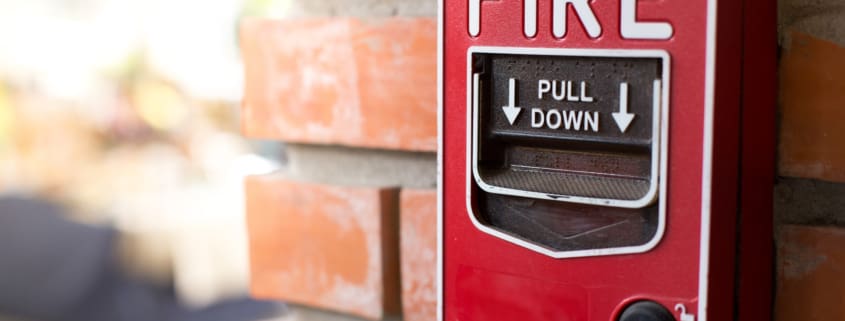
A fire alarm system is a system of connected devices working together to detect and warn people when smoke or fire is present. Alarms can be triggered by smoke detection, heat detection, or manual pull stations. Alarms vary from traditional systems to motorized bells, wall-mountable sounders, and even to electronic notification systems, strobes, and voice alert systems.

The NFPA has over 300 different types of fire codes, but Code 72 is reserved exclusively for fire alarms. 

Code 72

Code 72 is a great guide to follow when considering fire alarm requirements. The NFPA states that “with today’s modern furnishings, fires can spread much more rapidly than in the past when more natural materials were used. Because of this, having a sufficient number of properly located smoke alarms is essential to maximize the amount of available escape time.” 

In general, a good foundation to follow is to have fire alarms in: 

  • Office rooms
  • Hallways
  • At least one on every floor

In addition, there are outdated smoke alarms that are no longer recognized by NFPA’s standards. This is another crucial reason that annual or monthly checkups on fire safety codes are essential. If the fire alarms in your commercial building have not been recognized by NFPA, then it’s time for a major update.

So… What About My Building?

Well, there’s no clear-cut answer for what fire safety system will work for your unique building. (In case you forgot, we haven’t seen it!) There are various factors that impact the number of fire alarms needed. Some of these might include:

  • Types of ceilings
  • Amount of square footage
  • Number of floors
  • Number and condition of stairwells
  • Window location
  • And more fun fire safety stuff!

A great standard to follow is to have notification and detection devices on every level in order to follow national fire protection standards. Fire prevention and safety tips should always be updated, and emergency exit signs and emergency lighting should become a focal point in a fire inspection.

Alarm and detection systems from VFS Fire & Security Services address both internal alarms and the detection of fires in critical areas of your business. We provide top-of-the-line systems, installation, maintenance, and options for monitoring based on your risk and the complexity of your fire alarm needs.

Emergency Lights and Exit Signs Deserve Love and Attention, too!

Although they are sometimes overlooked, emergency lights and exit signs actually should fall into regular fire safety maintenance rhythms. It’s actually a National Fire Protection Association (NFPA) fire safety requirement to keep up-to-date emergency lights and exit signs. So, stay up-to-date and understand NFPA 101.

The code states that “emergency illumination shall be provided for a minimum of 90 minutes in the event of failure of normal lighting. The illumination must not be less than an average of one foot along the path of egress at floor level.”

Here’s what giving some love and attention to your overlooked exit signs and emergency lights might look like.

Emergency Lights and Exit Signs Deserve Love and Attention, too!

Testing

Since there are clear NFPA codes in place, there are guidelines to follow for annual inspections and emergency protection. Professionals are trained to know what to look for when it comes to emergency illumination.

There are a few steps you can take in your commercial building to ensure that your inspection goes as smoothly as possible. For one, make sure all emergency exit signs are easily accessible for the fire safety professional. 

This means making sure that the area surrounding the emergency illumination is free of obstructions for full access. For monthly inspections, some emergency exit signs have test buttons that can easily be pressed with the help of a ladder. Again, each commercial and educational building will have a different setup and might require specific inspections and maintenance. 

Red flags to look for while testing includes dull lighting, light bulbs that have blown out, and flickering. Overall, there is an emergency light combo that will work for your commercial building.

What Could Go Wrong?

If you fail to have your emergency lights and exit signs checked monthly (or at least annually), lives could be at risk. These systems are essential to guiding occupants out of a building in an emergency situation.  If the equipment in your commercial building malfunctions during an actual emergency, there is a huge liability risk. Fire prevention is our specialty, so connect with us to learn more about annual inspections.

We tell you what’s due when it’s due, and why it’s due. At VFS, we constantly communicate with your team to keep you up-to-date on the latest information within your facilities.

Learn more on our updated website today! 


The Sprinkler is More Than an Outdated Dance pressure monitors for fire safety

It’s summertime! Time for dancing, talking, and sunshine. Maybe you’re feeling rusty with your social skills, and have a big party coming up without any amazing talking points.

Well, might as well give it a shot with different types of sprinklers! (But here’s a major hint: leave the sprinkler dance at home. You know, that cringy 80s dance move…) Here’s a rundown of different sprinkler systems for national fire prevention.

Wet Pipe System

These systems are the most popular sprinkler systems. They are extremely effective, low-cost, and low-maintenance. The system’s pipes remain filled with water. Once triggered by the heat source, water flows through the activated sprinkler to the source of the fire. These systems are extremely quick in reacting to potential fires; however, they are at risk of freezing in cold environments.

Dry Pipe System

In freezing climates, dry pipe sprinkler systems are a more suitable choice than wet pipe systems. These systems do not carry water in the piping until activation.

Instead, these pipes are filled with pressurized air and nitrogen. When the system is activated, the valve opens and water flows in when the sprinkler head is triggered.

As the water is not housed in the actual piping, you can guess that the disadvantage of dry pipe systems is that their response time is delayed. Another potential downfall to these systems is the required maintenance. Sprinkler corrosion is more prevalent in these systems, as the compressed air and oxygen create an enticing environment for corrosion.

Pre-Action System

Pre-action sprinkler systems are used to protect areas where water damage from damaged sprinklers or piping needs to be avoided. These are the middle ground between dry and wet fire protection systems.

Water is not contained in the sprinkler piping and is held back by a pre-action valve. The valve is opened when flame, heat, or smoke is detected. The detection system must detect a fire and the valve must open to initiate water to flow within the pipes. These systems are ideal for water-sensitive environments such as museums, data centers, libraries, vaults, and freezer warehouses as they carry a low risk of accidental discharge. They prevent excessive water damage and work ideally in cold conditions as the water is not held within the pipes to prevent freezing in the pipes.

Deluge System

Deluge suppression systems are typically used in special hazard installations when water must be applied to an entire area for fire protection. These systems are considered a ‘dry fire protection system’ as the piping for the system is empty and at atmospheric pressure with the sprinkler heads open. When heat or fire is detected by the system, the deluge valve releases the water, dry chemicals, inert gases, or foam.

These systems are typically used for facilities where an entire area needs to be protected immediately; rather than by a zone or specific location of the source of the heat or fire. Typical facilities that utilize deluge suppression systems are airport hangars, chemical plants, processing plants, and data storage centers. These systems are especially useful when you need to quickly flood an area to prevent a fire from growing.

The Sprinkler is More Than an Outdated DanceFoam Water Systems

Foam water systems are a type of wet sprinkler system that combines both water and a foaming agent for large-scale fire extinguishment. These specific irrigation systems are generally installed in facilities where extinguishing a fire can be more challenging than usual, due to the flammable and combustible contents housed within. 

Additional Fire Safety

Fire Pumps

Fire pumps are designed to supply water to the fire sprinkler system and its components at a higher pressure rate to effectively extinguish a potential fire. There are two main types of fire pumps: diesel and electric and they require different frequencies of maintenance and inspections due to their different components needs.

Fire Backflow

This equipment is designed to prevent water from flowing back into the main water supply. This prevents the water supply from being contaminated or polluted due to backflow. 

How to Install (VFS, Of Course!) 

At VFS Fire & Security Services we understand that your unique building needs unique fire protection systems. Our team is equipped to ensure you receive the fire protection you need to keep your building and your people safe from harm.


Building Compliance vs. Building Complaints (clearly marked fire exits)

Building Compliance vs. Building Complaints (Not a Spelling Error!)

There’s a good reason for the codes and standards established by the National Fire Protection Association (NFPA). Compliance isn’t a punishment, it’s a roadmap to safety, protection, and long-term sustainability.

With over 300 codes written in “legal-ese,” it’s not always as intuitive as it should be to comply with fire safety codes. So, we’ve created a cheat sheet to steer you in the right direction— it doesn’t have to be so overwhelming.

300 Fire Protection Compliance Codes?!?

Do you think you know them all? If you dare, check out our latest quiz to test your fire code knowledge. 

Unless you score perfectly on the fire safety quiz, it’s likely that your building does not have to comply with all 300 NFPA codes and standards. Searching the NFPA’s database here can simplify the process.

Codes you’ll regularly encounter, however, might include: 

NFPA 99

Health Care Facilities Code

NFPA 72®

National Fire Alarm and Signaling Code®

And others that are very specific, such as: 

NFPA 418

Standard for Heliports

Compliance isn’t the goal. Safety is the goal, and—in that vein—we always recommend the following precautions be taken.

Dispose of Excess Packaging in Real-Time

It seems like the stuff of action moves, and yet, it happens all the time. Piles of boxes can fuel a fire that might otherwise be easily managed. Oily rags can spontaneously combust. Rag disposal is essential to safety. Ensure you dispose of excess packaging in real-time.

Don’t Put a Lantern in the Shed with The Cow. 

Check your fire extinguishers. An expired extinguisher is not only frustrating, but it can be deadly. A popping sound when you turn on the light is a warning! Inspect electric lines that are old or unreliable. These tips and tricks might all seem out of pocket, but one day you might thank us for not putting that lantern next to your beloved cow, Betty. 

Get Honest Regarding our Disaster Preparedness

Whether it be for fire, earthquake, flood, locusts, and any other eventuality, get honest about your current disaster preparedness.

If you haven’t already, make sure everyone knows what to do, who is in charge, how to get out, and where to go following. This is a serious one for anyone who owns a business in California especially. The earthquakes have already started and don’t seem to be slowing down. 

Bring in the VFS Experts

We’ve seen it all. Our teams can ensure compliance and that it isn’t all you’re doing to prevent fires. We are a full fire and life safety contractor and after-market service, provider. Whether your fire prevention needs are related to fire sprinkler systems, alarms systems, extinguishers, backflows, fire pumps, suppression, special hazards, monitoring, DAS systems, emergency notification (the list goes on and on!), we can not only inspect and maintain those systems but also design, build, and install! With our inspections program, we manage, schedule, and track your inspections, deficiencies, and repairs so you don’t have to. 

At VFS Fire & Security Services, we pride ourselves on the caliber of our team members, our commitment to a holistic understanding of your needs, and our-list wine collection (get to know our founder!). We are the team you want to bring to your project.  Connect with us, take a look inside our new site!

VFS is your partner from start to finish: A walk through the onboarding process

Maybe you’re on the fence about hiring VFS. Maybe even wondering, “How would VFS go about onboarding my company into fire protection services?”

We offer a wide variety of services, so here’s a timeline of our involvement, and remember, we partner with you from START TO FINISH (not an exaggeration). 

Since you’re on our website, odds are you need help with fire protection services. This is a smart move for you as we approach fire season. Great news, you’ve already completed the first step! By simply showing interest in protecting your commercial property and employees. 

Free Consultation

Yes, you read that right. A FREE consultation, a hard offer to pass up. Click here to schedule your consultation today. It’s as simple as having a quick conversation with one of our fire protection experts to identify your unique needs.  

Who We Serve 

No matter the industry, VFS has you covered. From our dispatch team to our field technicians we are equipped with a full staff of fire protection experts and a robust knowledge of each specialized environment. We are constantly staying up to date on emerging trends in technology as well as new requirements and code changes to keep you informed and in compliance. Here are some of the markets we help to protect: 

  • Property Management 
  • Industrial & Manufacturing 
  • Oil & Gas
  • Transportation 
  • Retail 
  • Education 
  • Data Centers
  • Hospitality 
  • Healthcare 

The Specifics

Once we’ve decided that our companies will be a great fit as partners, it’s time to get down to the nitty-gritty. We offer a variety of services for all of your fire protection systems including the following: 

  • Service & Repair 
  • Testing & Inspection
  • Design/Build 
  • Retrofits
  • System Upgrades 

Just to name a few. 

How We Help 

At VFS we believe in a proactive business model. We manage the who, what, why and where of your fire protection assets and their inspection and maintenance schedule. It is essential to stay on top of your fire protection systems to prevent any potential accidents or costly repairs. 

Our advanced platforms and highly trained dispatch team allow us to manage inspections and testing from inception to execution. We tell you what’s due, when it’s due and why it’s due, and are constantly communicating to your team to keep you up-to-date on the latest information within your facilities. Fortify your building with reliable fire protection systems inspected and maintained by the experts at VFS

Once we help you decide which of our services are right for you, it’s go time. Visit the VFS website today for more information on becoming a partner.