that-guy-just-stole-a-drill-1

WHY SO INSECURE?  BILL, THAT TOOL BELT LOOKS GREAT ON YOU…  HOW TO IMPROVE SECURITY FOR CONSTRUCTION COMPANIES

Construction companies are hot spots for theft. Most construction sites are open without proper security to assist them in combating the growing issue of theft. Stolen construction equipment and materials alone can account for up to $1 billion a year in losses.

As a construction company owner, it’s time to face your insecurities. Here are a few strategies you can implement to get more secure and we mean, improve your worksite’s security. 

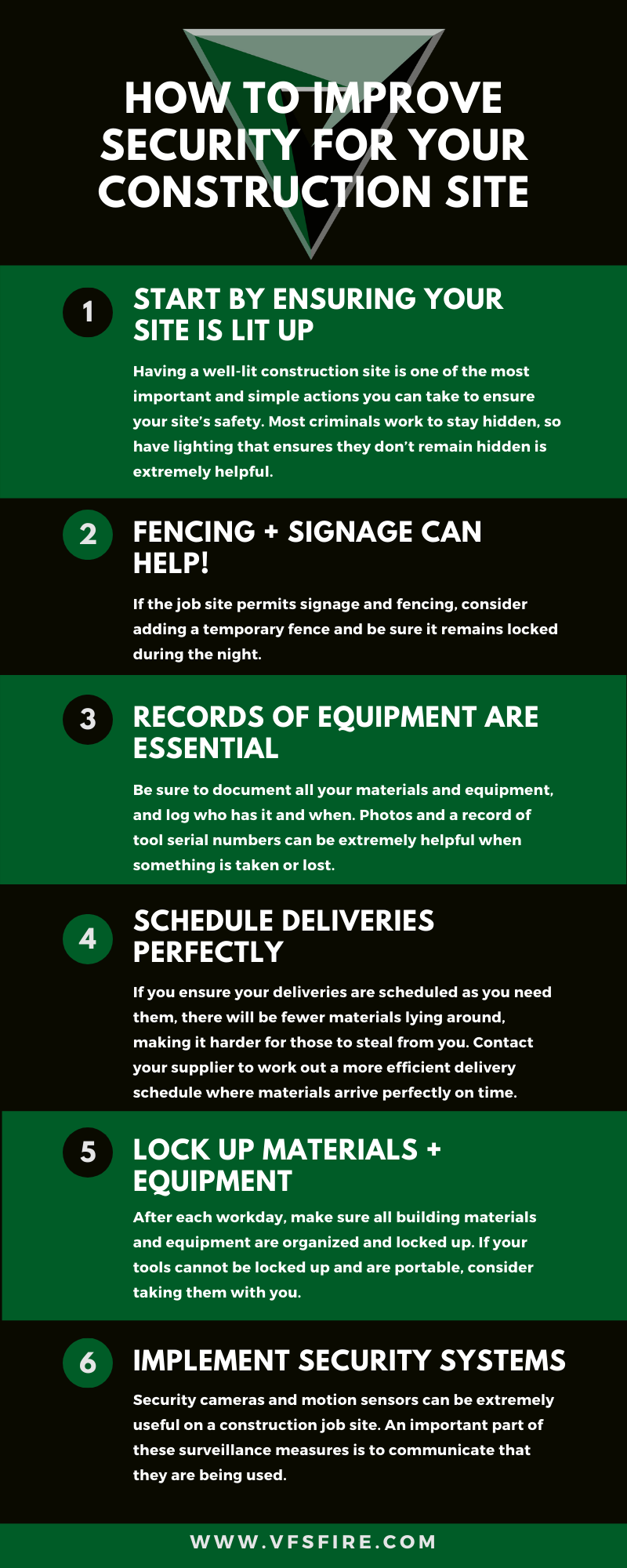
START BY ENSURING YOUR SITE IS LIT. (LIKE YOUR AUNT MARTHA ON NEW YEAR’S EVE)

In all seriousness, having a well-lit construction site is one of the most important and simple actions you can take to ensure your site’s safety. Most criminals work hard to stay hidden, so having lighting that ensures they can’t hide is extremely helpful in preventing crimes of opportunity. 

Outside of those crimes of opportunity, construction theft is most perpetrated by employees. With proper lighting, employees will be less likely to move unseen into areas in which they are not authorized and less likely to share the worksite location with nefarious friends and relations who might take advantage of a poorly lit site. 

FENCING (NO, NOT THE SPORT) AND SIGNAGE CAN HELP!

While a sword is an effective weapon, we mean perimeter fencing, not an epee.  Fencing is a simple means of discouraging theft on the construction site.  Signage is a great way to ensure that no one can claim ignorance in the face of a trial. If the job site permits signage and fencing, consider adding a temporary fence (and be sure it remains locked during the night). 

If you’re looking into fencing for your construction site, a fence of at least 8 feet will make it difficult for criminals to climb over. Make sure there is only 1 entrance and exit into the site and install cameras for monitoring activity through the non-active working hours or at night.

Another old-school but effective way to increase your construction site’s security is to post “no trespassing” signs throughout. And if they’re out of those signs at Home Depot you can post your “beware of dog” sign as a backup plan as well! Not even the scariest of criminals wants to have a meet and greet with Cujo.

This signage ensures that outside people know only certain people are permitted in the construction area. Adding that the site is under surveillance (and actually placing the site under surveillance) could help increase awareness and security. 

RECORDS OF INVENTORY AND CONSTRUCTION EQUIPMENT ARE ESSENTIAL

Because there isn’t a national registration database, like the DMV, that registers construction equipment, it’s important you take on that task on your own. Be sure to document all your materials and equipment, and log who has access to each piece of equipment and when. Photos and a record of tool serial numbers can be extremely helpful when something is stolen or lost.

The National Equipment Register (NER) is the best place to register your equipment and improve your chances of getting stolen equipment back. If equipment does get stolen. Notify the police and the NER to help recover stolen equipment from pawn shops and second-hand tool websites. 

MAKE SURE DELIVERIES ARE SCHEDULED IN A TIMELY MANNER

Ensure your deliveries are scheduled as you need them. Therefore, there will be fewer materials lying around, making it harder for those with criminal intentions to steal from you. Contact your supplier to work out a more efficient delivery schedule for your construction project where materials arrive on time.  Having piles of tools lying around can give thieves the false impression that you won’t notice if just one pneumatic drill is missing. 

CLEAN UP AND LOCK UP MATERIALS AND EQUIPMENT

While this tip may seem obvious, it’s important to say. After each workday, make sure all building materials and equipment are organized and locked up. If your tools cannot be locked up and are portable, consider taking them with you. For equipment that is not portable, consider utilizing chains and cables to anchor them to their place, and remove all keys. 

LAST, BUT CERTAINLY NOT LEAST, IMPLEMENT SECURITY SYSTEMS

Security cameras and motion detectors can be extremely useful on a construction job site. An important part of these professional monitoring services is to communicate that they are being used. Consider placing these cameras around the perimeter of your property and near the work trailer. And don’t forget those signs we suggested earlier.

Our digital video monitoring can protect your facility against internal or external theft, and vandalism. They can also keep track of movements and people. Our systems can connect to your IP network. Previously recorded or live video can be viewed from a computer anywhere with internet access. 

At VFS, we understand how important the safety of your construction sites are to the success of your business. We always utilize the best combination of hardware and software to provide reliable and cost-effective, integrated solutions for your security needs. Contact us today for your personalized solution!

One-resolution-you-cant-skip-out-on-is...-2

IT’S A NEW YEAR… YOU’VE ALREADY SKIPPED THE GYM DON’T SKIP ON YOUR FIRE PROTECTION. HERE’S A CHECKLIST TO HELP

We’re four days into the new year, if you haven’t already ditched your resolutions, you’re amazing. We’re not going to lie… we snuck a piece of chocolate cake after dinner last night. While a piece of chocolate cake, or a day off of the gym won’t seriously harm your wellbeing, there is one resolution you can’t forget about- fire protection for your building.

This year, it’s time to make fire protection a top priority. That being said, we’ve come up with a few items that should be on the top of your mind if you’re committed to fire safety. 

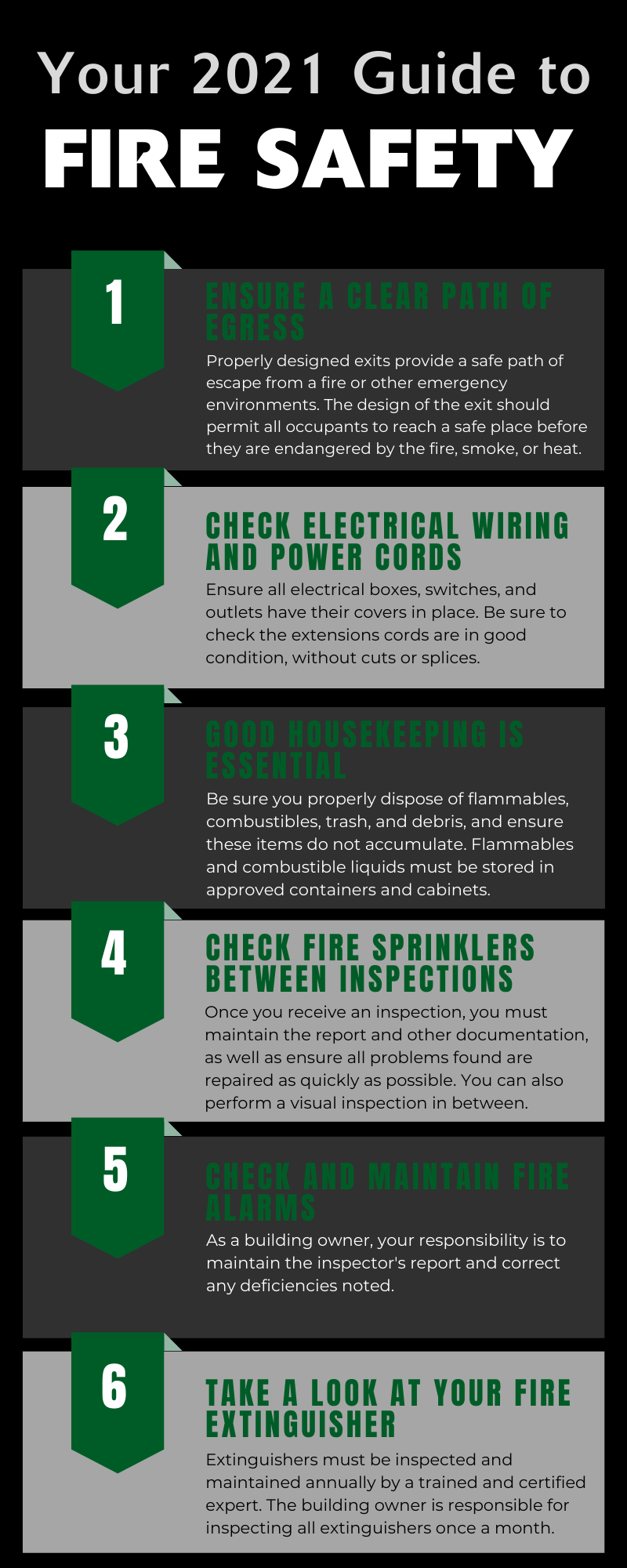
FIRST, ENSURE YOUR BUILDING HAS A CLEAR PATH OF EGRESS/ EXIT. 

Identifying the ‘means of egress’ from your building is essential to keeping your employees safe from harm. Properly designed exits provide a safe path of escape from a fire or other emergency environments. The design of the exit should permit all occupants to reach a safe place before they are endangered by fire, smoke, or heat. The goal of an effective means of egress is to get everyone out of hazardous areas in the shortest amount of time possible.

A FEW COMPONENTS MAKE UP THE MEANS OF EGRESS, INCLUDING EXIT ACCESS, EXIT, AND EXIT DISCHARGE.

  • Exit access is the travel path or area between where a person is located and an exit.
  • Exit is the portion of the means of egress that is separated by construction or equipment from other areas of the building. Components of an exit include walls, floors, doors, etc. An exit may include vertical or horizontal means of travel, like stairways, ramps, and passageways. It is important to note that elevators are not accepted as exits!
  • Exit discharge is the portion of a means of egress between the end of the exit and a public way or other safe places.

As a building manager or owner, it is important that you self-inspect these means of egress. In doing this, you need to make sure each component is easily identifiable, visible, accessible, and unobstructed. The door must operate in the direction of the exit so people won’t be trapped inside. 

NEXT, CHECK YOUR ELECTRICAL WIRING AND POWER CORDS.

NFPA 70: National Electrical Code (NEC) ensures all wiring and electrical installations comply with regulations. Building owners and managers do not need to be an expert in electrical code, however there are a few things you should be on the lookout for to be cautious!

The first thing you should do to ensure your electrical wiring is safe is to ensure all electrical boxes, switches, and outlets have their covers in place. Also, be sure to check that extension cords are in good condition and free of any cuts or splices. Extension cords should never be a substitute for permanent wiring, they are only permitted to be used with temporary equipment. 

Surge protectors must be connected directly to an outlet and, like extension cords, cannot be attached to the structure, extend through walls or the ceilings, be run under doors, or be covered by floor coverings.

The last item to check in the electrical wiring category is electrical panel boxes. Electrical panel boxes and main building disconnect must be identified and accessible for fire department personnel. All panels and breakers must be labeled and open spaces should have proper covers in place. 

GOOD HOUSEKEEPING IS ESSENTIAL– NO WE’RE NOT TALKING ABOUT DUSTING AND MOPPING. 

In the ‘fire safety’ sense, housekeeping refers to the general condition of the building and the items stored within it. Be sure you properly dispose of flammables, combustibles, trash, and debris, and ensure these items do not accumulate. Flammables and combustible liquids must be stored in approved containers and cabinets and should be clearly labeled to avoid accidental ignition. 

Electrical, boiler and HVAC rooms cannot be used for storage and must remain clear of items that are not essential to the operation of the equipment within them. 

ENSURE FIRE SPRINKLER SYSTEMS RUN EFFECTIVELY IN BETWEEN INSPECTIONS

Fire sprinkler systems must meet NFPA 25: Standard for the Inspection, Testing, and Maintenance of Water-based Fire Protection Systems requirements. These standards require that different parts of the sprinkler systems receive inspections in quarterly, semi-annual, annual, and five-year intervals. 

The inspections are performed by the fire protection contractors and other qualified personnel. As a building owner or manager, you do not have to directly handle any of the actual inspections. However, as a building owner, there are a few things you can do to ensure these inspections run efficiently and effectively, starting with scheduling the inspection appointments when due!

Once you receive an inspection, you must maintain the report and other documentation, as well as ensure all problems found are repaired as soon as possible. 

A building owner or manager can utilize a simple visual inspection to ensure these systems run effectively between inspections. First, ensure that no items are stored within 18” of any sprinkler head. Next, ensure all sprinkler heads are free of paint and corrosion and nothing is attached to them. If you come across violations of these requirements during your visual inspections, the issues should be reported and remedied immediately. 

FIRE ALARM MAINTENANCE AND INSPECTIONS

Under NFPA 72: National Fire Alarm and Signaling Code all fire alarm systems must be inspected, tested, and maintained at semi-annual, annual, and even quarterly intervals. Like sprinkler systems, these inspections are done by trained and certified inspection personnel. Fire alarm system experts are trained in the inspection, maintenance, and testing of a particular brand of fire alarm systems. 

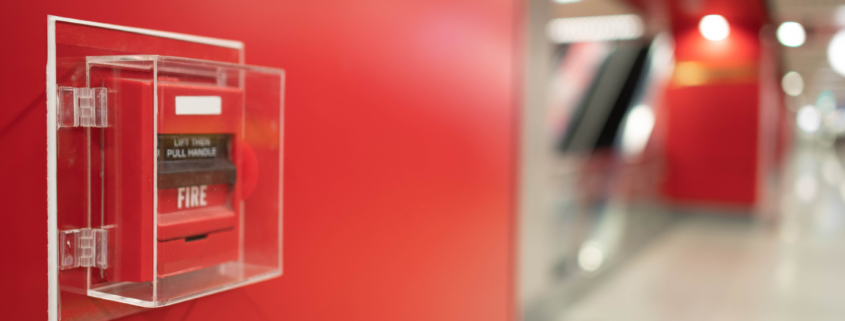
As a building owner, your responsibility is to maintain all reports and correct any deficiencies noted. Building owners and managers can also make sure the fire alarm panel is accessible, the location is labeled, and all documentation is maintained and available. Manual pull stations should be visible and accessible. All alerts should be reported to the alarm company so that any issues can be addressed quickly. 

LASTLY, LOOK AT YOUR FIRE EXTINGUISHER. 

NFPA 10: Standard for Portable Fire Extinguishers illustrates the requirements to select, place, test, and maintain fire extinguishers. A trained and certified expert must perform annual inspection and maintenance. Additionally, building owners are responsible for inspecting all extinguishers once a month.

The inspection requires that extinguishers are visible and accessible. They must also be free of rust, damage, and the gauge read in the “green” operation level. Additionally, all extinguishers must mount on the wall. The weight of the extinguisher determines the appropriate height of placement: 40 lbs or less may be installed at 5 feet above the floor. Any heavier should sit at a maximum height of 3 ½ feet. The base must be at least 4 inches above the floor. 

As you look to ensure your fire safety in your building for the new year, start by utilizing this checklist! Ensuring you remain prepared for the unexpected is the first step to ensuring the safety of your people and your building’s safety.

Building security systems

SANTA’S COMING DOWN THE CHIMNEY, AND SO IS A BURGLAR. ARE YOU KEEPING AN EYE ON YOUR OFFICE WHILE EVERYBODY’S OUT?

Most people know that crime escalates around the holiday season. Whether it be burglary, cyberattacks, or theft, it’s important that your business is prepared for everything. Understanding the importance of implementing proper security measures into your building is essential to the safety of your team. 

WHAT SECURITY MEASURES SHOULD YOU BEGIN IMPLEMENTING TODAY TO PROTECT YOUR BUSINESS LATER?

START BY TRAINING YOUR EMPLOYEES ON PROPER PROTOCOL.

Inform your employees of the best ways to protect your business and those who work within it. Security efforts throughout your company will not work if your employees are not on board. This training should cover physical security protocols. It should also cover what to do if someone dangerous is within the facility as well as cybersecurity protocols. 

Be sure your upper management has a large role in the implementation of security training and protocols. Upper management’s buy-in is essential. It helps ensure the rest of your staff understands the importance of the training. It also leads to greater follow-through with implementation.

ASIDE FROM EMPLOYEE EDUCATION, IMPLEMENT PROPER ACCESS CONTROL SYSTEMS.

Access control into your facility is one of the most straightforward ways to protect your business’ assets, inventory, and most importantly, your employees. An access control system that functions properly and is custom-tailored for your company is a powerful management tool. It helps to restrict access to certain rooms or track movement throughout your facility. 

At VFS, our security experts understand what it takes to implement proper security controls. We design access control systems that also integrate into your intrusion alarm systems.

ANOTHER ASPECT TO CONSIDER IMPLEMENTING IS INTRUSION ALARM SYSTEMS.

Intrusion alarm systems not only deter trespassers, but they also alert you and the authorities when someone unlawfully enters your building. Because every client has unique needs for their security measures, we design your security plan to meet your specific needs. VFS’ alarm systems integrate into your access control and video surveillance to ensure you are covered in the event of an emergency.

IMPLEMENT VIDEO SURVEILLANCE TECHNOLOGY TO PROTECT YOUR BUSINESS.

Video monitoring within your facility can help identify internal and external threats, like theft, vandalism, and workplace violence. Video surveillance deters people from actually performing these threats, while also making it easier to identify those that do. 

We connect your video surveillance system to your IP network. This means historical footage and live video can be viewed from a computer anywhere you have internet access. These systems can also work in conjunction with your access control system to ensure your business remains safe and secure.

Implementing video surveillance technology into your business’ security plans can also lower insurance premiums. As the insurance companies see it, your risk goes down immensely with proper security systems in place.

LASTLY, REVIEW YOUR SECURITY SYSTEMS AND PROTOCOLS REGULARLY.

At VFS, we implement security measures for your specific business needs. In doing this we also analyze where your business might need more or less security. We track each client’s activity and reliability using an in-depth reporting system.

These analytics dictate our recommendations and information on which systems you use the most. It also helps to inform us where your business has the potential to improve.

Understanding where your business’ security needs work is essential to keeping your people and your business safe from harm. When you have the proper systems and processes in place, you’re ready to handle anything that may come your way. Contact us today to learn more about how we can help your business remain safe and secure.

TOP 7 FIRE HAZARDS AROUND THE HOLIDAYS

It’s Lit! Holiday Fire Safety Tips for Roasting Chestnuts on an Open Fire 

JK… Open Fires are Very Dangerous

It’s almost the New Year, and you know what that means… it’s time to light it up! But be careful. 2021 has shown us you can never be too careful when it comes to health and safety. In other words, don’t go out of 2021 with a literal bang…

Keep in mind a few fire safety precautions as you ring in the new year. We’re a fire prevention company, so what else would we be talking about going into the New Year? Here are some fire safety tips to consider.

YOUR SMOKE DETECTOR MAY BE ANNOYING, BUT THERE’S A REASON

We understand the ringing from a smoke detector is the last thing you want to hear during the holidays. (Depending on who you ask, it’s arguably better than hearing Mariah Carey’s ‘All I Want’ for the 100th time though…)

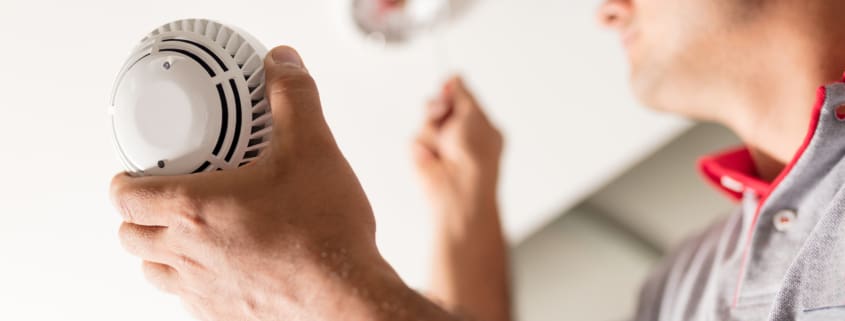
Regardless, smoke detectors have a purpose and that purpose is to keep you safe. Be sure your smoke detectors are up-to-date and have working batteries as you ring in the new year.

JUST LIKE THE AIRPORT, UNATTENDED BAGGAGE – IN THIS CASE, POTS AND PANS – SHOULD BE SUBJECT TO REMOVAL

The holiday season brings about quite a few family dinners and get-togethers that are centered around a meal. With aunts, uncles, or even just your immediate family, the kitchen can get a bit chaotic during the holiday season. It’s easy to become overwhelmed and distracted, and potentially forget about a pan on the stove or a simmering pot. Yikes!

Did you know the majority of kitchen fires begin with unattended pots and pans? While you’re cooking it’s important to remain present and aware of your surroundings.

Another useful tip is to keep clutter to a minimum, especially in the kitchen.

ROCKIN’ AROUND AN OPEN FLAME JUST ISN’T AS CATCHY…

The glow of your Christmas tree is beautiful, we agree; however, be sure you take precautions to ensure your safety. Christmas trees are one of the most common fire hazards during the holidays.

Make sure your tree remains hydrated and away from heat sources. According to the National Fire Protection Association (NFPA), 25% of the Christmas tree fires that occur do so because the tree was too close to a heat source, like a candle or space heater.

YES, WE KNOW IT IS COLD, YES, THE AMBIANCE OF YOUR FIREPLACE IS PERFECT, BUT PLEASE BE CAREFUL

According to the NFPA, heating equipment is the second cause of house fires each year. We understand that heating your home is important.

You want to stay warm and cozy during these cold months, but you also need to stay safe. The last thing you want is to be standing out in the freezing cold while the fire department hoses down your house…

When using a space heater, ensure it is at least three feet from flammable items, including decor, upholstery, and Christmas trees.

As far as your fireplace goes, be sure your damper is open, a protective screen is in play, and gifts and other items remain far away. Fireplaces can crackle and release embers that could spark into something more dangerous than being on the naughty list.

OVERPACKING YOUR OUTLET IS NOT LIKE OVERPACKING FOR YOUR HOLIDAY VACATION… IT’S WORSE!

While there are plenty of things that need to be plugged in during the holiday season, it’s important not to overcrowd outlets. Electrical shorts and malfunctions are some of the leading causes of electrical fires.

As you string your lights and plug more decor into an outlet, be sure the outlet’s total load does not exceed 15 amps. While it may be tempting to have your house shining at all times during the holidays, turn off your decor when you leave the house and when you go to bed as a safety precaution.

BE AWARE OF INDOOR AND OUTDOOR DECOR

As you decorate for each respective holiday, it’s important to test all lights and cords. Then, replace anything faulty prior to use. Candles should be placed out of reach of children and be sure to extinguish them before you leave the room.

As far as outdoor decor goes, only use extension cords and light displays intended for outdoor use. Those cords should be kept away from both snow and standing water to avoid damage to the insulation.

Cords should not be pinched in doors, windows, or placed under furniture. Keep in mind, metal ladders conduct electricity, so opt for a wood or fiberglass ladder instead.

THE LAST THING YOU NEED THIS YEAR IS TO LOSE A FINGER, BE CAREFUL WITH YOUR FIREWORKS

You may want to celebrate the start of 2022 with fireworks. We understand, it’s tradition. It’s important, however, to be aware of the safety hazards that come with fireworks.

According to the NFPA, 10% of fireworks fires occur during the period from December 30- January 3, with a peak on New Year’s Day.

If you choose to set off fireworks on your own:

  • Check local laws prior
  • Choose a location away from buildings and trees
  • Ensure any spectators stand well away from the site
  • Keep water or a fire extinguisher close by in case of emergency

As we Californians know, if you’re experiencing a drought in your area, it is recommended that you cancel the fireworks show altogether.

While all of these safety precautions may seem daunting or even annoying as you tackle the holidays, they are extremely important to your safety. From our team at VFS, we wish you a happy and safe holiday season!

Speaking of stressful seasons, are you worried about preparing your property for hurricane season? Read how to prepare on our blog.

7 holiday fire hazard tips

protection during the holidays

IT’S THE WEEK BEFORE CHRISTMAS, AND ALL THROUGH THE OFFICE, NOT A FIRE WAS BURNING… BECAUSE OF VFS

The last thing you want to deal with during the holiday season is an office fire or a security breach. Being around extended family is enough stress for all of us! With that being said, it’s important to have all the systems in place to keep your business safe while you’re not there. 

At VFS, we believe in protecting your business like it’s our own. We implement specific systems catered to your business’ needs. A few of the systems and processes we put in place include:

FIRE SPRINKLERS

Our full-service in-house Design/Build departments and our in-house manufacturing shop work together to ensure the highest quality and most accurate results. We use state of the art hydraulic modeling software for our Fire Sprinkler Services. Some of our Fire Sprinkler Services include:

  • Commercial/Industrial and Retail New Construction sprinkler installation
  • Retrofit or Tenant Improvement 
  • Wet or Dry Pipe Systems
  • Special Hazards
  • In-Rack Sprinklers
  • Fire Pumps
  • Microbiologically Influenced Corrosion Testing and Remediation
  • Underground pipe repair
  • NFPA-25 Inspection, Testing and Maintenance
  • 24-hour Emergency Service
  •  Fire Alarm Design, Detection, and Monitoring

ALARMS

VFS offers our clients in-house design experts to develop solutions and meet your site-specific needs. Whether that means protecting your healthcare institution, your education facility, a distribution center, or a refinery, our experts are ready to help. With our alarm systems, we offer a few unique services:

  • Installation by trained and certified technicians
  • In-house design
  • Testing and mass-notification
  • Safety monitoring
  • 24-hour emergency service
  • Preventative maintenance

SECURITY SYSTEMS

Taking proper security measures for your business, especially during the holidays, is essential to its safety. At VFS, we implement the proper security measures that address your specific business needs. These measures include:

  • Access control systems
  • Mass notification systems
  • Video surveillance
  • Intrusion alarm systems. 

We utilize the best combination of hardware and software to provide reliable, cost-effective, integrated solutions for your business’ needs. 

SPECIAL HAZARD PROTECTION 

We pride ourselves on our expertise in special hazard protection. As renowned leaders in Fire and Life Safety Systems for Special Hazard Facilities, we have a reputation to uphold! 

VFS is one of the few companies able to perform the highly technical and sophisticated projects surrounding special hazards. We provide design-build solutions from the concept and budgeting phase to the final construction and occupancy phase for facilities across all 50 states!

Our company pillars are built on safety and security in everything we do, so you have peace of mind that you’re entrusting your business in good hands. Our CEO, Randy Nelson sits on the technical committees for NFPA 16 (code standard for the installation of foam-water sprinkler). Needless to say, we’re prepared to provide your business with the best possible solutions.

ONGOING INSPECTIONS

We utilize state-of-the-art technology to keep inspections simple for our clients. We give you a one-stop-shop to manage all your inspection requirements, whether that be for your single facility or your nationwide portfolio of properties. 

EMERGENCY RESPONSE COMMUNICATION SYSTEMS (ERRCS)

VFS Fire & Security Systems is an FCC licensed hold contractor, which is required for the installation of ERRCS. Our experts are prepared to design, furnish, and install the systems that your specific building requires. The ERRCS signal enhancement systems include indoor antennas, coaxial cables, DAS headend (booster amplifier), outside coax cable, outside directional antenna, and vertical 2-hour rated enclosures. 

The holiday season brings about a lot of stress for most people. At VFS, we want to eliminate the stress surrounding your building’s safety and security. Contact us today to implement proper systems and processes today.

5 things not to do

Stop, drop, and roll, that’s all we need to know about fires right? Not exactly… While that advice is extremely important when you catch on fire, during a fire you need to know exactly what to do, and what not to do. Here are a few tips!

ONE OF THE BIGGEST MISTAKES PEOPLE MAKE IN STRUCTURAL FIRES IS OPENING VARIOUS DOORS WITHOUT CHECKING FOR AN ALTERNATE ESCAPE ROUTE.

While yes, fleeing the scene is an important instinct during a fire, sometimes opening a door can cause more damage than good.  Fires require oxygen to spread. When you open a door (especially one that is warm) the fire receives that oxygen, therefore exposing you to dangerous heat levels and toxic carbon monoxide gas. 

Before you open a door to exit, check for alternate routes where flames have not spread. If you are on the first level of the building, a window can also act as a great exit plan. 

WHAT IF THE FIRE STARTED OR SPREAD IN THE ROOM YOU’RE IN?

If the fire is in the room you’re in, and you need to open a door to exit the danger, please do! However, be sure you close the door behind you to ensure you give a barrier to the fire. Opening the door will invite the fire to spread and potentially follow you out. In an effort to contain the fire, close the door behind you! 

WHILE THE ELEVATOR MAY SEEM LIKE THE QUICKEST WAY OUT, IF THERE’S A FIRE IT COULD PUT YOU IN REAL DANGER! 

If there’s a fire in your building, avoid the elevators at all costs. The stairs are the safest, best option during a fire. During a fire, elevators can malfunction, disable, or experience various electrical issues. When you are in a high-rise or larger building locate the emergency exits and stairwells to ensure you remain safe. 

FIRE EXTINGUISHERS ARE GREAT, BUT YOU NEED TO KNOW HOW TO USE THEM!

Fire extinguishers can save you during a fire. With fire extinguishers, it is important to understand how to use them. The most common mistake with fire extinguishers is that you aim too high on top of the flames. In order to be most effective, the fire extinguisher needs to be pointed at the base. 

When using a fire extinguisher, pull the pin, aim at the base of the flames, squeeze the trigger, and sweep from side to side. As a business owner, it’s important to check fire extinguishers for expiration. Fire extinguishers should be replaced every few years. 

DON’T BREAK THE WINDOWS

Fire-related deaths are typically caused by smoke inhalation rather than the heat of the fire itself. With that being said, breaking windows during a fire allows the fire to gain more access to oxygen, helping the fire grow, and decreasing your ability to escape. When you keep the windows closed you are starving the fire. 

DO NOT RETURN TO THE BUILDING FOR YOUR BELONGINGS. 

As you’re told when you’re in elementary school, leave all your belongings and allow the first responders to fight the fire. You might think you have time to grab a few things, but fire can move quicker than you expect. 

It’s important to understand what you need to do, and not do in case of a fire. We understand it can be challenging to not panic when a fire occurs. The best thing you can do is leave it in a safe way, and allow the first responders to take care of it.

5 movie myths

THE ONLY THING THAT SHOULD BURN IS A DISCO INFERNO

We’ve all seen the scene in The Incredibles when a small amount of smoke from a self-destructing note causes the entire sprinkler system to go off and douse the family. Movies are designed to bring impossibility to reality for viewers. With alien invasions, transforming cars, and flying humans that’s just fine. But one movie effect that is misconceived too frequently is fire safety, and it can be dangerous. 

SPRINKLER SYSTEMS DON’T DRENCH YOU.

One of the most blatant false portrayals of fire protection systems is the use of fire sprinklers. Countless movies have shown us characters getting doused with water after a tiny amount of smoke is near a single sprinkler. 

Sorry to disappoint, but the scene in Die Hard when John McLean sets off all the sprinklers with a lighter is not feasible outside of the big screen. Hollywood dramatics make our perception of fire protection systems skewed.

In reality, each sprinkler head is triggered individually. As the heat spreads throughout a building, more sprinkler heads are activated. While deluge systems do exist, they are not as common and are typically used in very specific applications such as power plants, aircraft hangers, and chemical plants. 

A LITTLE SMOKE DOESN’T TRIGGER YOUR SPRINKLER SYSTEM

Smoke actually does not trigger a sprinkler system to turn on. Despite what The Incredibles depicts, sprinkler systems detect heat in a building and activate based on the heat temperature within the room. In Changing Lanes we see a similar movie myth, Ben Affleck lights a piece of paper on fire and holds it under a sprinkler head, triggering all the sprinkler heads in the office building. As this might add to the theatrics of a Hollywood flick it is not the mechanical truth of a fire sprinkler system.

PULLING THE FIRE ALARM DOES NOT DISCHARGE WATER.

Remember the scene in Mean Girls when the principal hits the fire alarm pull station with a baseball bat and all the sprinkler heads go off? Yeah… that’s not true either. Activating a pull station doesn’t trigger the sprinklers to dispel water, it sends a signal to the main fire alarm panel which activates the alarm and notifies occupants to get out of the building. 

If every time a fire alarm pull station was activated, even accidentally (which happens quite frequently especially in educational environments) and the sprinklers went off, it would cause an immense amount of property damage. Here’s how it REALLY works: when pulling a fire alarm pull station, the alarm sends a signal to the fire alarm panel and activates the alarm to notify occupants to leave. 

YOU CAN USE THE WRONG TYPE OF FIRE EXTINGUISHER. 

Firefighters use dry chemical extinguishers or hose lines to extinguish fires, like the car fire in Terminator 3. The firefighters in Terminator 3 use carbon dioxide fire extinguishers to try to put out the car fire, which, in reality, could have made it worse. In real fire situations, the wrong type of fire extinguisher could spread the fire or not put out the flames. Here’s a quick recap of the different types of fire extinguishers and their uses: 

  • Class A: freely burning, combustible solid materials such as wood or paper
  • Class B: flammable liquid or gas
  • Class C: energized electrical fire (energized electrical source serves as the ignitor of a class A or B fire – if electrical source is removed, it is no longer a class C fire)
  • Class D: metallic fire (titanium, zirconium, magnesium, sodium)
  • Class K: cooking fires – animal or vegetable oils or fats

USING THE ELEVATOR AFTER THE FIRE ALARM OR SPRINKLER GOES OFF WON’T WORK.

A fire breaks out on the 13th floor, the main character jumps into the elevator to get away. If this was actually possible, it would be extremely dangerous. When fire protection systems activate, the elevators will be removed from normal service and recalled to a specific landing. This action prevents the possibility of occupants being delivered to a smoke or flame-filled area. 

Understanding what fire protection services can do for you is an important part of your building safety. While most of the movie scenes are extremely entertaining, they don’t give you an accurate representation of what you should do when a fire occurs. As you start considering your fire prevention tactics, begin with implementing the proper fire safety measures in your building.

HOW TO PROPERLY PREPARE FOR A FIRE DISASTER

Fire safety is important in the workplace– just like it is anywhere else. A well-developed and thought-out course of action can keep you and your peers from recreating Dwight Schrute’s fire safety preparedness plan. Let’s discuss how to properly prepare for a fire disaster.  

Why do you need to prepare for potential office fires?

A fire in your commercial building isn’t something you expect to encounter on a Wednesday afternoon. If a fire breaks out, you don’t want to be caught unsure of what to do. Exhibit A– the entire fire episode “Stress Relief” from “The Office.”  


On a serious note, fire damage is considered one of the most destructive elements to your commercial building because it can cause: 


  • Disruption of business activities
  • Loss of business documents
  • Damage to property 
  • Liability claims
  • Injury 
  • And more


Not convinced? Here are a few statistics from 2017-2019 gathered by the U.S. Fire Administration on nonresidential building fires:


  • 108,5000 nonresidential building fires were reported to U.S. fire departments each year 
  • Nonresidential fires caused over $2.8 billion in property loss 
  • These fires occur mostly during the hours of 2 pm – 7 pm
  • The leading cause of nonresidential fires is cooking 


Now that you know why you should prepare for potential office fires, let’s discuss the fire preparation measures that can help. 


Fire Preparation Tips

In the wise words of Miguel De Cervantes, “To be prepared is half the victory.” 


Here are a few tips on how to prepare in the event of a fire. 

1. Take the proper precautions for your building.

Fire prevention programs and precautions are put in place to ensure your building remains safe in case something happens. No… we don’t mean lighting the door handles on fire or setting off smoke bombs throughout your office. 

via GIPHY


Here are some precautions you can take today.


  • Control smoking materials and open flames 
  • Store flammable and combustible liquids safely 
  • Use electrical equipment correctly 
  • Perform housekeeping tasks regularly 
  • Purchase fire-safe furnishings and decor 
  • Maintain commercial kitchen exhaust systems 
  • Control special hazards 


2. Fire Safety Education

Fire prevention relies on people knowing what to do when an emergency occurs. Fear and ambiguity are not a recipe for success, however, knowledge and preparedness are. While Dwight Schrute had good intentions for his fire safety education day, the way he went about employee education could use some work.


via GIPHY

Educate your staff on the proper procedure if a fire occurs.


Safety plans can be explained through training, sent via email, and be posted on walls. When building a fire safety education program, include: 


  • How to identify and correct fire hazards
  • A detailed office building evacuation plan
  • How to use fire extinguishers
  • Examples of recent fires to highlight the importance of fire safety
  • Details of how to put out various types of fires, and when they are likely to occur


3. Implement Fire Protection and Life Safety systems

Fire protection shouldn’t be improvised. Put systems in place that protect the building, people, and items from fire hazards. These systems include fire alarm systems, fire suppression systems, and other building measures. There are both active and passive fire protection systems.


Active Fire Protection Systems

prepare for a fire the right way

Active fire protection systems require some amount of action or motion to work efficiently. These systems can be manually operated, like a fire extinguisher, or automatic, like sprinkler systems. 


Some of these systems include: 

  • Fire/smoke alarm systems
  • Sprinkler Systems
  • Fire extinguishers
  • Sprinkler Systems
  • Firefighters are also considered active fire protection 


Passive Fire Protection Systems

Passive fire protection systems compartmentalize buildings to help prevent the spread of fire and smoke from one room to another. These systems help limit the amount of damage done to a building and give the occupants more time to evacuate.


Some of these systems include:

  • Fire/smoke dampers
  • Fire doors
  • Firewalls/floors


Both active and passive fire protection systems can help keep your building and your employees safe from harm.

A Final Word

Your building’s fire preparation plan should be well thought out and organized in advance. By doing so, you help further pro

tect your staff, business materials, and the commercial building from the dangers of fire hazards.  If we’re being honest, it’s much more fun to watch Dwight’s preparedness plan than to live it. 


For more information on the difference between fire prevention and fire protection, read our article, here


be alarmed be very alarmed

Be alarmed, be very alarmed. Not about ghosts, witches, and warlocks. About your building’s alarm system! It’s time to invest in Fire Alarm systems that work effectively and keep your business safe from harm. Not only will it save your business, but it will also save you money. Here’s how.

PROTECT YOUR PEOPLE

One of the biggest reasons to invest in a commercial fire alarm system is to protect your team. Your people are your biggest asset and are the people who care most about your business. It is so important that they are protected with the best and most reliable fire alarm systems on the market. Just as important as the system itself, is the company you entrust to inspect and maintain them! Entrust VFS Fire & Security Services to support the integrity and reliability of your fire alarm systems and the safety of your people!

THE COST OF RECOVERY

Recovering from a catastrophic fire can bring about a greater investment for your company than protecting your business in the first place. Even if one catastrophic fire can be prevented, the investment in a professionally installed fire alarm system is worth it. Not only do they help you prevent fires while you’re in the office, but they also prevent them when you are away. With proper design, early detection, and advanced technology you can avoid potential damage and loss of assets from an unforeseen fire. 

HAVE YOUR ALARM SYSTEM INSTALLED PROFESSIONALLY

A fire event can have devastating consequences for businesses and their employees. A professionally installed fire alarm system can help to prevent or lessen the severity of such events. Through proactive measures such as staying up-to-date on required inspections, professional maintenance,  and mass notification systems VFS can help protect your employees, your customers, and your property. 

SAVE ON INSURANCE

Insurance companies offer discounts for systems that guarantee their investment in your building. When you implement a top-of-the-line commercial fire alarm system, insurance companies feel safe insuring your business. As an insurance agency, if a fire alarm system saves your building during the night, when you’re on vacation, or if any other unforeseen circumstance occurs, they will feel much better about their investment. The average savings on insurance for installing a commercial fire system is around 20%! 

At VFS, safety is our top priority. We offer top-of-the-line fire alarm systems installed and maintained by licensed professionals to keep your business and people safe! Our team offers in-house design, inspection and testing, maintenance and repair, mass notification systems, safety training, monitoring, 24-hour emergency service, and preventative maintenance. Want to know more? Contact us!

BUILDING COMPLIANCE VS BUILDING COMPLAINTS (NOT JUST A SPELLING ERROR)

BUILDING COMPLIANCE VS BUILDING COMPLAINTS (NOT JUST A SPELLING ERROR)

There’s a good reason for the codes and standards established by the National Fire Protection Association (NFPA).  Compliance isn’t a punishment, it’s a roadmap to safety, protection, and long term sustainability. Building Compliance vs Building Complaints (not just a spelling error)– it doesn’t have to be so overwhelming. 

With over 300 codes written in “legal-ese”, it’s not always as intuitive as it should be to comply with fire safety codes so we’ve created a cheat sheet to steer you in the right direction. 

300 FIRE PROTECTION COMPLIANCE CODES?!?

The likelihood is that your building does not have to comply with all 300 NFPA codes and standards. Searching the NFPA’s database can simplify the process: https://www.nfpa.org/codes-and-standards/all-codes-and-standards/list-of-codes-and-standards

THERE ARE CODES YOU’LL REGULARLY ENCOUNTER SUCH AS 

NFPA 99Health Care Facilities Code

And 

NFPA 72®National Fire Alarm and Signaling Code®

And others that are very specific such as: 

NFPA 418Standard for Heliports

Compliance isn’t the goal, safety is the goal, and – in that vein – we always recommend the following precautions be taken: 

DISPOSE OF EXCESS PACKAGING IN REAL-TIME.  PILES OF BOXES CAN FUEL A FIRE THAT MIGHT OTHERWISE BE EASILY MANAGED. 

Oily rags can spontaneously combust, it seems like the stuff of action moves, and yet, it happens all the time.  Rag disposal is essential to safety.

DON’T PUT A LANTERN IN THE SHED WITH THE COW. 

Check your fire extinguishers.  An expired extinguisher is not only frustrating, it can be deadly. 

A popping sound when you turn on the light is a warning!  Inspect electric lines that are old or unreliable. 

REFINE YOUR DISASTER PREPAREDNESS PLAN FOR FIRE, EARTHQUAKE, FLOOD, LOCUSTS, AND ANY OTHER EVENTUALITY.

Make sure everyone knows what to do, who is in charge, how to get out, and where to go once they get out. 

BRING IN THE EXPERTS AT VFS.  WE’VE SEEN IT ALL. 

Our teams can ensure compliance and ensure that compliance isn’t all you’re doing to prevent fires. We are a full fire and life safety contractor and after-market service provider. Whether your needs are related to fire sprinkler systems, alarms systems, extinguishers, backflows, fire pumps, suppression, special hazards, monitoring, DAS systems, emergency notification (the list goes on and on) we can not only inspect and maintain those systems but we also design, build and install! With our inspections program, we manage, schedule, and track your inspections, deficiencies, and repairs so you don’t have to. 

At VFS we pride ourselves on the caliber of our team members, our commitment to a holistic understanding of your needs, and our sommelier level wine collection (get to know our founder).  We are the team you want to bring on to your project.  Connect with us, take a look inside.

Take theses precautions to keep your building safe