YOUR MARINE FIRE SAFETY CHECKLIST

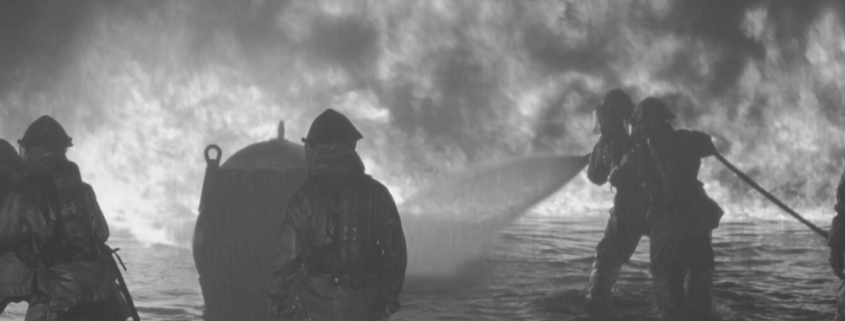
You wouldn’t think fire could stand a chance when surrounded by a body of water—but it does. Boom! It feels like in every action movie ever created, a boat explodes in a bay or on the ocean. Although dramatized, there’s a reality to it. Directors paint the danger picture perfectly!

At VFS Fire & Security Services, we are the drivers of innovation within the fire protection industry, including specialization in marine fire safety. Although most fires seem to look the same in movies, there are a variety of different types of fires that may occur on your vessel. We’re in the business of educating people and keeping them safe when it comes to fire protection, which is why a marine fire safety checklist is necessary for any marine-related organization.

YOUR MARINE FIRE SAFETY CHECKLIST

There is a multitude of boxes to check when it comes to keeping your maritime operations safe and fire-free. We’re providing a comprehensive list to get you thinking about the safety of your marine operations.

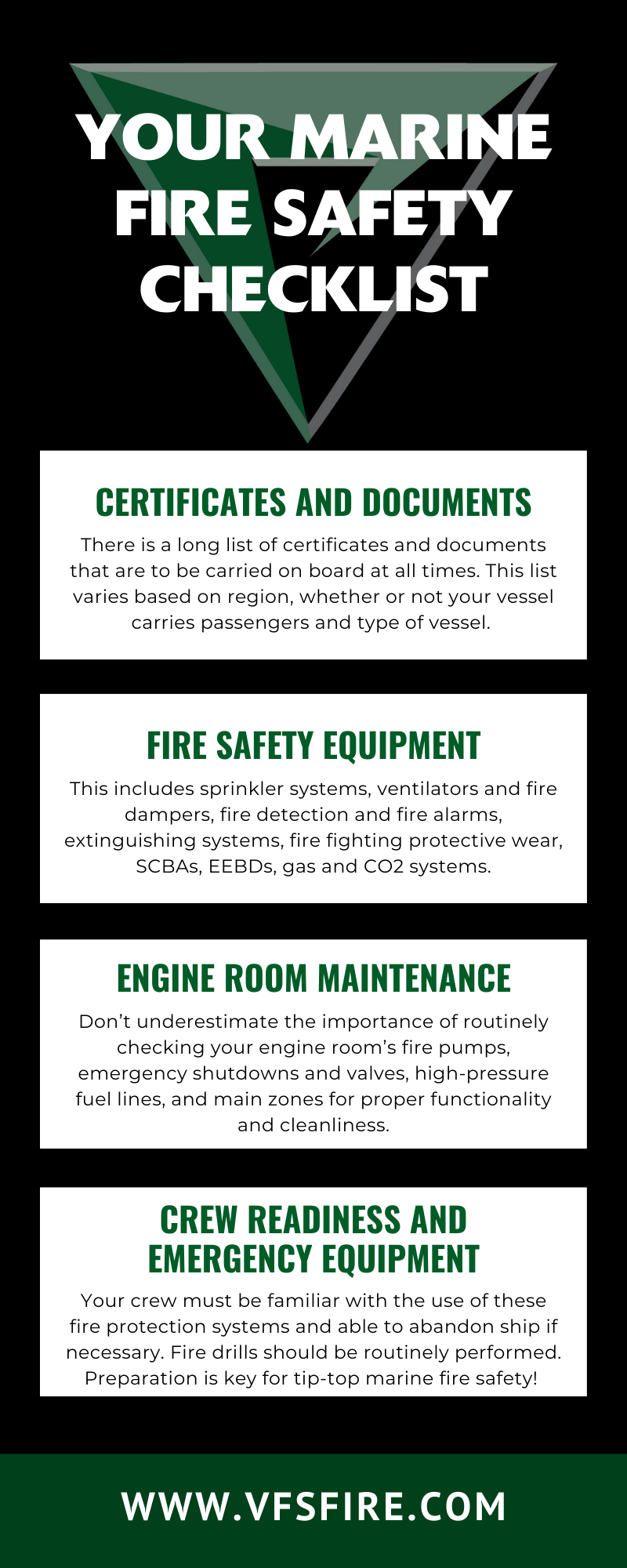
CERTIFICATES AND DOCUMENTS

There is a long list of certificates and documents that must be carried on board at all times. This list varies based on region, whether or not your vessel carries passengers, and vessel type. 

This list might include a Cargo Ship Safety Equipment or Passenger Ship Safety Certificate, all servicing records including proof of fire extinguisher servicing and pressure tests, a damage control manual, any records of testing, drills, and maintenance, a variety of training manuals, the list goes on! For more specific information on staying up to code and what you need to keep on board, contact our VFS team!

FIRE SAFETY EQUIPMENT

There are hundreds of safety measures in place to prevent fire aboard your vessel, including a handful of safety equipment that must be carried and tests that must be performed. Let’s shoot for smooth sailing, please! 

  • Sprinkler systems: Valves, alarms, pumps, and pressure gauges must be tested and properly working with pipework in fair condition
  • Ventilators and fire dampers: Must be clean and free of debris with flaps in fair condition
  • Proper fire detection and fire alarm systems that provide the necessary  coverage and protection of assets on board
  • Properly installed extinguishing systems
  • Personal equipment, including fire fighting protective wear, self-contained breathing apparatuses (SCBAs), and emergency escape breathing devices (EEBDs)
  • Properly functioning gas and CO2 systems

Additionally, pathways must be always free of obstruction and clearly marked in the event of an emergency evacuation. Doors must always only be held open by approved methods.

ENGINE ROOM MAINTENANCE

Did you know that approximately 90% of marine fires start in the engine room? This considered, don’t underestimate the importance of routinely checking your engine room’s fire pumps, emergency shutdowns and valves, high-pressure fuel lines, and main zones for proper functionality and cleanliness.

DECK MAINTENANCE AND CREW READINESS

In case of an emergency, your crew should be familiar with the use of these fire protection systems and able to abandon ship if necessary. Fire drills should be performed routinely. Preparation is key for tip-top marine fire safety. As for deck safety, structures in place might include a variety of paint lockers, ventilators, and international shore connections.

EMERGENCY EQUIPMENT

Fingers crossed, this equipment doesn’t need to be used! Your emergency equipment, including emergency generators, batteries, pumps, and tankers, however, must be properly maintained, inspected, and ready to be used at any moment.

HERE TO HELP!

While you’re on the water, whether it be for pleasure or work, marine fire safety and preparation cannot be overlooked. Having the right fire safety equipment and performing the right maintenance and routine inspections may be the difference between life and death.

Our VFS team is prepared to get your vessel in tip-top shape with the right marine fire safety equipment. In fact, the VFS Houston Team has been continuing to grow our marine department and has recently acquired four new Tug & Barge Companies—bringing their annual total of vessels to perform fire safety inspections and testing to approximately 375.

With VFS by your side, you’ll be the fire protection talk of the town! Get in touch today to see what we can do for you.
FACILITIES MANAGERS! JUMP INTO THE MESH PIT

Why You Need MeshWrx in your Building

Announcing! MeshWrx alarm monitoring systems are coming to a building near you. Take a leap into the mesh pit and see what all the hype is about! 

Facilities managers, ensuring you have top-of-the-line alarm monitoring systems throughout your facility is essential. Traditional alarm systems just won’t cut it anymore. It’s time to cut the cords. Mesh alarm monitoring systems are designed to make alarm systems more reliable, cost-effective, and fast.

What is MeshWrx?

MeshWrx was created from the experience that VFS Fire & Security Services had in making sure our clients fire safety was top-of-the-line. VFS has continually developed industry-leading technology that complements our services to provide the best customer experience in the fire and life safety industry. 

Our CEO, Randy Nelson, recognized a need to deliver a more reliable fire and life safety monitoring system in the market. He invested in technology to impact life-saving communication and, thus, MeshWrx was born! Contact us today to see how our MeshWrx systems can help your company!

What are mesh network alarm monitoring systems?

Mesh network alarm monitoring systems were designed to be reliable, cost-effective, and hassle-free. Traditional tower-based solutions and other single-route systems can be affected greatly by environmental disturbances and equipment problems and interrupted more frequently with more dead spots than mesh network systems. Mesh networks continually optimize multiple signal pathways to find a way to send a signal. 

When Hurricane Harvey hit in 2017, mesh technology was the only uninterrupted communication source. All landlines, cellular, and IP failed during this emergency. When an emergency occurs you need to ensure your alarm systems are up to the task of communicating to the outside. Mesh networks provide a holistic approach to ensuring your alarm monitoring needs are met. 

The networks were originally built for the demanding military, police, and fire communication pathways. The radio frequency’s quick response times and reliability have proven to be the most effective choice in protecting lives and property.  MeshWrx has created a solution for facilities managers to get the greatest reliability based on industry standards and the fastest method available in the industry for fire alarm monitoring. 

Why do you need a mesh network alarm system?

Prevent Property Damage

Top-of-the-line alarm monitoring systems respond when they detect the slightest amount of smoke, which allows the fire department and those in the building to respond as quickly as possible. Quick response times help you ensure that smoke doesn’t turn into a large fire. 

COMMUNICATE WITH THE FIRE DEPARTMENT QUICKLY

Quick response is essential to saving your building and your people. The alarm monitoring system you choose needs to be able to communicate quickly and consistently with the fire department. Instead of worrying about calling and reporting the fire, people inside can focus on evacuating the building and helping those in need.

24-HOUR PROTECTION AND RELIABILITY

When you install a mesh alarm monitoring system your building remains protected 24/7. You can ensure your building is protected when people aren’t in it. With mesh network systems, you can feel at ease that your building is safe especially during an emergency.

Cellular and IP systems tend to slow or drop as more users are added to the system. MeshWrx’s performance is actually improved when more users are added. Mesh networks create multiple pathways for an emergency signal to reach first responders. 

MOST IMPORTANTLY, IT KEEPS YOUR EMPLOYEES SAFE

Lastly, and most importantly, installing an alarm monitoring system ensures your employees remain safe. It’s important your employees know that they can safely exit the building when a fire occurs, as the alarm system will notify emergency responders. 

DELUGE VS. PRE ACTION SPRINKLER SYSTEMS

Don’t let the holiday season make you forget the importance of fire safety (and the different types of sprinkler systems). 

We understand it’s easy to forget the importance of fire sprinkler systems when there are presents to give, and delicious meals to eat with loved ones. But this year, don’t let the holiday ham set fire, and then not have the proper sprinkler system in place to protect your building from the fire. 

If you happen to need your indoor showers (sprinkler systems and fire suppression systems) it’s best to understand what systems serve your specific building’s needs. Deluge vs. Pre Action Sprinkler Systems—what’s the difference? —–When it comes to fire protection for your building there are many options to consider, and it’s important to understand what these options may entail.

DELUGE SYSTEMS 

WHAT IS A DELUGE SYSTEM?

Deluge suppression systems are typically used in special hazard installations when water must be applied to an entire area for fire protection. These systems are considered a ‘dry fire protection system’ as the piping for the system is empty and at an atmospheric pressure with the sprinkler heads all open. When heat or fire is detected by the system, the deluge valve releases the water, dry chemicals, inert gases, or foam. 

The type of agent used in the systems is dependent on the hazard type and location of the fire protection system. Once filled, it releases from all sprinkler heads simultaneously, which helps to blanket the entire area, which, in turn, controls the fire. 

These systems are typically used for facilities where an entire area needs to be protected immediately, rather than by a zone or specific location of the source of the heat or fire. Typical facilities that utilize deluge suppression systems are airport hangars, chemical plants, processing plants, and data storage centers. These systems are especially useful when you need to quickly flood an area to prevent a fire from expanding. 

WHAT ARE THE TYPES OF DELUGE SYSTEMS?

There are a few different types of deluge systems. These systems can be electronically operated, others are pneumatic. The electronically operated systems work when an alarm is set off via a detector, pull station, or another alarm system. Once the alarm is activated, it will energize the solenoid valve, which releases the prime water, or other agents, off the top of the valve, which allows the deluge valve to trip and deliver the agent to the hazard. 

PRE-ACTION SPRINKLER SYSTEMS

WHAT IS A PRE-ACTION SPRINKLER SYSTEM?

Pre-action sprinkler systems, on the other hand, are used to protect areas where water damage from damaged sprinklers or piping needs to be avoided. These are a middle ground between dry and wet fire protection systems. 

The major difference between a deluge suppression system and a pre-action system is that pre-action systems are filled with compressed air. The sprinkler heads remain closed until needed, and a pre-action valve holds back the water. It is a hybrid dry/wet system as it is a dry system until it is activated at which point it becomes a wet system. 

Pre-action fire sprinkler systems require two steps to discharge the agent. When the system first detects heat or fire the pre-action valve opens. Next, the pipes are flooded with water, dry chemicals, inert gases, or foam. After it’s filled, the specific sprinkler head must detect heat or fire to open. Then, the system will work to extinguish the fire in the immediate area.

Unlike deluge systems, these systems only cover an area that detects heat or fire. Coverage expands as more sprinkler heads detect heat/fire.

WHY WOULD YOU CHOOSE A PRE-ACTION SPRINKLER SYSTEM?

One of the best reasons to incorporate pre-action sprinkler systems into your building is because sprinkler heads may be falsely triggered. When these sprinkler heads accidentally activate, there may sometimes be costly, irreversible property and water damage to your building. Because pre-action fire sprinkler systems require two-part discharge, they provide an elevated level of protection from accidental discharges. 

Another reason to utilize pre-action fire sprinkler systems is the ability of the pressurized air or nitrogen to detect leaks in the system. This allows you to ensure your system is functioning properly when you need it most. 

WHAT OTHER SPRINKLER SYSTEMS SHOULD I CONSIDER?

There are a few other fire sprinkler systems to consider as you work to ensure your building remains protected. 

WET PIPE SPRINKLER SYSTEMS

These systems are the most popular sprinkler systems. They are extremely effective, low-cost, and low-maintenance. This system’s pipes remain filled with water. Once triggered by the heat-source, water flows through the activated sprinkler to the source of the fire. These systems are extremely quick to react to potential fires, however they are at risk of freezing in cold environments. 

DRY PIPE SPRINKLER SYSTEMS

In freezing climates, dry pipe sprinkler systems are a better choice than wet pipe systems. These systems do not carry water in the piping until they are activated. 

Instead, these pipes are filled with pressurized air and nitrogen. When the system is activated, the dry pipe valve opens and water flows in when the sprinkler head is triggered. 

The disadvantage of these systems is that their response time is delayed. Another potential downfall to these systems is the required maintenance. Sprinkler corrosion is more prevalent in these systems, as the compressed air and oxygen create an enticing environment for corrosion. 

SINGLE INTERLOCK

These systems require a single, preceding fire detection event. This event is typically an activation of heat or smoke detectors. When the event occurs, the pre-action valve allows water to enter the piping system. With these systems, if a sprinkler head activates before this, it will sound a trouble alarm. However, no water will be discharged. 

DOUBLE INTERLOCK

Double interlock pre-action systems provide an added layer of protection. These systems require a preceding fire detection to occur in conjunction with an automatic sprinkler activation, prior to water releasing into the pipes. One alarm activation will not be enough to discharge these sprinkler systems. 

At VFS Fire & Security Services we understand that your unique building needs unique fire protection systems. Our team is equipped to ensure you receive the fire protection you need to keep your building and your people safe from harm.

fire extinguishers in a fire suppression system

Did you know that a fire suppression system can help minimize damage caused by a fire in your business? Fire suppression systems are designed to quickly put out fires, which can help to save lives and property.


Although your fire protection needs vary based on the type of commercial building you own, you’ve likely heard of many distinctive fire protection systems. But do you know the key differences between a fire sprinkler system and a fire suppression system? It’s important to understand these differences as a business or building owner.


In this blog post, we will discuss the different types of fire suppression systems and how to maintain them. Let’s get started!


What Are the Basics of Fire Suppression Systems?

There are two main types of fire suppression systems: Wet and dry. Wet systems use water to extinguish a fire, while dry systems use chemicals. Each type of system has its own advantages and disadvantages.


Wet systems are typically more effective at putting out a fire than dry systems. However, wet systems can also cause more damage to property. This is because water can damage electronics and other sensitive equipment.


Dry systems, on the other hand, are less likely to cause damage to property but are not as effective at putting out a fire. Dry systems are ideal in locations that experience freezing temperatures and for buildings that house important items (for example, museums and libraries).


When choosing a fire suppression system, it is important to consider the type of business you have. For example, if you have a computer server room, you will want to choose a system that is designed for this type of environment (AKA a dry system!)


Additionally, you should consider:


  • The size of the space that needs to be protected, and
  • The level of protection your commercial building needs

Types of Fire Suppression Systems

It’s important for a business or building owner to be aware of the different types of fire suppression systems available. Specific fire suppression systems include the following:


Clean Agent Fire Suppression Systems

Clean agent fire suppression systems use environmentally-friendly chemical reagents to put out fires. These are typically found in sensitive areas, such as data centers. The chemicals used are water-free and safe for the environment. Once a clean agent system is activated, clean-up is minimal!


Carbon Dioxide Fire Suppression

Carbon dioxide systems use CO2—colorless, odorless gas—to extinguish a fire. These systems are an incredibly efficient and cost-effective approach to fire protection. Clean-up following the activation of a carbon dioxide system is minimal.


Carbon dioxide fire suppression systems are currently being used in commercial shipping applications by the U.S Navy. The engine rooms of marine vessels utilize CO₂ instead of water as a suppression agent because water would damage the electrical and mechanical components of the engine. Additionally you wouldn’t want to put water into a vessel that is already at sea. It is common to find these systems in industries that handle steel and aluminum as well.


Industrial Fire Suppression Systems

Industrial plants need extra attention when it comes to fire protection, as most of the areas are in high-hazard environments. The fires that occur in these areas typically involve some type of chemical, liquid fuel, or other hazardous materials. 


Therefore, proper fire protection systems are essential. Industrial fire suppression systems typically use dry chemicals to extinguish the fire.


Restaurant Fire Suppression Systems

Kitchens require specific fire suppression systems. Kitchen fire suppression systems are designed to put out grease fires that would be worsened if you attempt to put them out with water. They typically utilize wet chemicals in a mist form to extinguish the fire quickly and effectively.


The Importance of Inspection and Maintenance

Once you have chosen a fire suppression system, it is important to maintain it properly. This includes regularly testing the system and making sure it is working properly. Additionally, you should have a plan in place for what to do if the system fails.


These systems need to be kept up as they can freeze or experience corrosion, among other issues within the system. In order to prevent these systems from deteriorating, they need to be regularly maintained. This helps to keep your system in good working condition and can identify any potential problems before they become serious.


In addition to regular servicing, it’s important to keep an eye on your fire suppression system for any changes that might occur which could affect its performance. If you notice anything unusual, don’t hesitate to contact your service provider so they can investigate and carry out any necessary repairs!


When it comes to fire protection, it really can be a matter of life or death.


How Often Should I Check My Fire Suppression System?

Most people understand that they need to have their fire suppression systems inspected on a regular basis, however, they may not know how often these inspections need to be conducted.


The answer to this question is not always cut and dry, as there are a number of factors that can contribute to how often your system should be checked.


It’s important to have your system serviced at least once a year, in line with a regular Fire Risk Assessment, and even up to four times a year depending on the type of system.


If your business has a complex system or operates in a hostile environment, more frequent servicing may be required. 


One of the most important things to keep in mind when it comes to your fire suppression system is that you need to be sure you are staying code-compliant. 


Staying code-compliant means that you will need to adhere to the schedule set forth by the National Fire Protection Association (NFPA) as well as any other local codes that may be in place.


Additionally, your insurance company may have its own guidelines when it comes to how often your system should be inspected.


Another important consideration is the type of system you have in place. Different types of fire suppression systems will require different inspection schedules. Check out a detailed list from Associated Fire Protection to learn more about specific timelines.


By ensuring that your fire suppression system is regularly serviced and maintained, you can help ensure its reliability in the event of a fire.


Ensure Your Business is Protected from Fire!

Fire protection systems needed for high-hazard areas are among the most technical and specialized fire equipment systems. At VFS, we pride ourselves on being a renowned leader in the special hazards sector.


In fact, our founder and CEO, Randy Nelson, sits on the technical committee for NFPA 16 (Code Standard for the Installation of Foam-Water Sprinkler) and understands just how critical proper installation and maintenance are on these specialized systems.


We bring our robust knowledge, expertise, and experience to find the safest and most reliable solution for every unique need and environment your building has! If you have any questions about fire suppression systems or need help choosing the right one for your business, please contact our team at VFS Fire & Security Services today.


We’d be happy to help you find the perfect solution for your needs!

To learn more, check out our blog to see who can inspect your fire protection systems.

SPECIAL HAZARD FIRE PROTECTION

WE REALLY KNOW HOW TO SUCK THE AIR OF THE ROOM

You have likely heard the rumor that the Yale library’s fire extinguishing system removes the air from the book stacks in the event of a fire, which would doom anyone inside the building. While the special hazard fire protection system utilized is designed to save the books from harmful sprinklers, it actually will not harm anyone inside the building! This is only one example of how special hazard fire protection systems protect your people and your valuable assets. 

WHAT IS A ‘SPECIAL HAZARD’?

An area deemed a ‘special hazard’ area can mean a few things. For one, it can be an area containing equipment or processes of exceptionally high value. It can also be an area containing unique, or irreplaceable assets- like the Yale library! Lastly, they can be areas where the revenue produced or its function is of greater value than the equipment itself. 

A special hazard isn’t simply an area, it can be a building, area, room, or a piece of equipment. From a fire protection standpoint, certain industries bring about additional challenges in the fire safety realm. Places like data centers, telecommunications, power generation, manufacturing and testing facilities, machinery spaces, and healthcare facilities. A typical fire alarm and sprinkler system simply won’t cut it for these types of buildings. 

At VFS, we’re experts in special hazard protection. We know how to ensure your unique building needs are met in terms of fire protection. We also know that special hazard protection begins with fire suppression systems, sounds, and communication systems. 

FIRE SUPPRESSION SYSTEMS

Fire suppression systems are designed to extinguish or control fires. They are activated by heat, smoke, or a combination of the two. Unlike typical wet-pipe sprinkler systems, suppression systems use gaseous, chemical, or foam agents to suppress the fire. Like the Yale library- we know how to suck the air out of the room! 

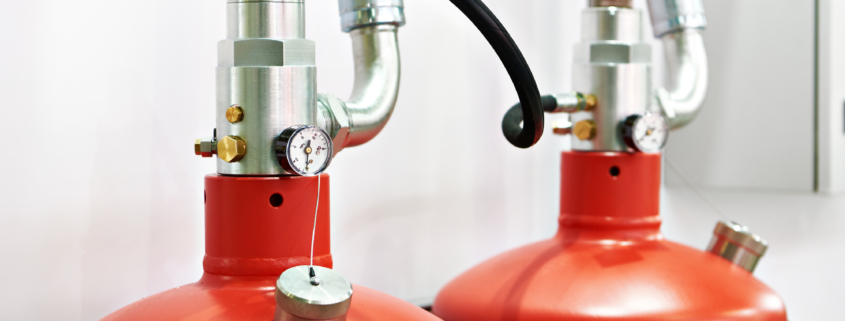
Because these fire suppression systems do not utilize water, they aid in protecting and preserving sensitive equipment and content within a very specific environment. Specific environments typically need specific different types of fire suppression systems. At VFS, we have the expertise to design, install, and maintain these systems with integrity. A few of the major special hazard systems we provide our clients include portable fire extinguishers, pre-engineered systems, marine, vehicle, pre-engineered kitchen systems, and gaseous systems. 

SOUND AND COMMUNICATION SYSTEMS

In an emergency, especially in a special hazard situation, communication is key. These communication systems work with your fire protection systems to ensure the safety of your people. At VFS, we support our clients in crafting internal and external sound, text, and visual notifications sent from a centralized location. 

These notifications are based on the type and severity of the threat. As well as location tools that identify at-risk personnel and assets. It is essential to have top-of-the-line sound and communication systems that ensure the safety of your most valuable assets.

We are a renowned leader in fire and life safety systems for special hazard facilities. We take pride in being one of the select few companies capable of performing highly technical and sophisticated projects. Our clients have access to our team every step of the way. From the design/ build stages to the implementation. 

The robust knowledge and vast experience our team retains provide the best possible solutions for all clients. Our technical and design expertise is recognized nationally. Our CEO and Founder, Randy Nelson sits on the Technical Committee for NFPA 16 (Code Standard for Installation of Foam-Water Sprinkler), so you could say we know what we’re doing! If you need a partner in your fire protection, contact us today!

5 THINGS CRE OWNERS SHOULD KNOW ABOUT INSTALLING ERRCS

DON’T GET IRKED BY ERRCS

What happens when an emergency occurs in your building? Will people be able to communicate outside the building for help? Will they be guided to safety? Can the occupants dial 911 from their cell phones?

It’s important that first responders are able to communicate with other emergency responders outside of the building. As a building owner, it is your responsibility to manage evacuation, communication, and signal systems. 

Buildings are typically composed of materials that inhibit cellular and other communication signals. In order to boost signals within your building and ensure public safety compliance, you can utilize ERRCS systems. 

WHAT ARE ERRCS?

An Emergency Responder Radio Communication Systems (ERRCS) is a required standard for most buildings. ERRCS is a building communication system that improves communication within the building to those outside. This extension of the public safety network utilizes small antennas called Distributed Antenna Systems (DAS) that receive and transmit radio signals from the first-responder network. 

These ERRCS systems are composed of various components that ensure they are working efficiently and effectively. A Bi-Directional Amplifiers system is integrated to connect the smaller antennas to the donor antenna. This antenna then transmits and receives radio frequencies from the public safety network. 

ERRCS IS NOT REQUIRED FOR EVERY COMMERCIAL BUILDING. HOW CAN YOU DETERMINE WHEN YOU NEED TO INSTALL ERRCS?

Start by checking your local jurisdiction to see if there are ordinances in place that relate to public safety communications. The general requirements for all buildings is that public safety radios must work in the building. If public safety radios are tested and work successfully, especially in critical areas like stairwells, electrical rooms, mechanical rooms, and elevators, then you will not be required to install an ERRCS. 

It’s important to understand what might block these signals before you hire someone to test your communication capabilities. Exterior walls and glass are just the beginning when it comes to potential signal blockages. Interior walls, office furniture, equipment, and people can also impact signal transmission. 

WHEN ARE ERRCS REQUIRED?

There are various requirements for installing ERRCS in your commercial building. Here are a few of the common requirements you need to be aware of. 

BUILDING SIZE

Buildings that have 3 or more stories, are 50,000 square feet in area, or have underground parking require the installation of ERRCS. Buildings with complex layouts have a challenging time keeping the signal strength in all areas of the building.

Challenging layouts typically include thick walls and multi-room floors. If your building is made up of metal, concrete, brick, wood, or Low-E glass, the signal may be blocked or disrupted. In order to remain in compliance with IFC regulations, you must ensure the RF signal is amplified in all areas of the building. 

LICENSING REQUIREMENTS

It’s important to ensure your Federal Communications Commission licensed radiotelephone transmitters are adjusted, maintained, and repaired up to code. These services require special training, so it’s important that you hire a trusted resource to perform inspection and maintenance on your equipment. Our experts at VFS are trusted to ensure our clients remain in compliance and up to code. 

PAGING SYSTEMS

It is essential that your ERRCS work cohesively with your fire protection systems. In order for the two to work together, you need to implement paging systems. Paging systems help announce instructions to building occupants to ensure their safety. 

SIGNAL STRENGTH

In order to remain in compliance with ERRCS requirements, a building must have a 95% majority of minimum signal strength of -95 dBm. This level is a standard in emergency responder communication systems. In order to ensure this requirement is met, you may need to boost the signal through DAS or other signal boosters. 

SIGNAL TESTING

Annual testing and maintenance are required to ensure standards are met and any interference is kept to a minimum. VFS is licensed and certified to help your building remain in compliance with these testing and maintenance requirements.

BATTERY BACK-UPS

Battery back-ups are required in case of power outages. When an emergency occurs, the power may need to be cut off to all parts of the building. When your back-ups are reliable, you ensure your emergency systems are running when you need them most. 

Do you know if your building requires ERRCS to be implemented? If not, our experts can help! Contact our team today to see how we can help your building remain compliant and, more importantly, safe!

FIRE SAFETY TIPS FOR COMMERCIAL PROPERTY OWNERS

EYEWASH STATIONS ARE NOT JUST FOR GETTING DEL FUEGO OUT OF YOUR EYES (WE GET IT… WE LOVE TACO BELL TOO)

Commercial Property Owners: Ensuring your building remains safe from harm is essential to your ongoing success. The foundation of your building safety protocol is fire safety. According to Chad Connor at AZ Big Media, about 120,000 commercial property fires occurred in 2019, resulting in $4.3 billion in property damage, 1,200 injuries, and 110 deaths. In order to ensure your commercial property isn’t included in that number, you need to put the proper fire safety precautions in place. 

START WITH REGULAR INSPECTIONS

Safety alert lights, fire alarms, fire extinguishers, and sprinkler systems must be inspected on a regular basis. Each fire protection system requires a different maintenance schedule. It’s important to stay on top of your inspection schedule in order to ensure your property remains up to code and safe for its occupants. 

  • NFPA 25 Standard for the Inspection, Testing, and Maintenance of Water-Based Fire Protection Systems
  • NFPA 72 National Fire Alarm and Signaling Code
  • NFPA 10 Standard for Portable Fire Extinguishers
  • NFPA 17A Standard for Wet Chemical Extinguishing Systems (Kitchen Systems)
  • NFPA 17 Standard for Dry Chemical Extinguishing Systems (Paint Spray Booths)
  • NFPA 2001 Standard on Clean Agent Fire Extinguishing Systems

At VFS, we assist our clients in maintaining their inspection schedules to ensure ongoing fire and life safety success. As a business owner, it’s important that you or your facilities manager are present for all inspections. Knowing the overall health of your facility allows you to plan for future expenses and report accurate safety updates to your insurers. 

ENSURE YOU HAVE THE PROPER FIRE PROTECTION SYSTEMS IN PLACE FOR YOUR UNIQUE BUSINESS

Your commercial property is unique to the needs of your business. Similarly, the necessary fire protection is unique to your commercial property. Understanding what fire protection systems you need in place to ensure your building remains safe is essential. Here are a few fire protection systems you may need to consider:

  • Smoke management systems
  • Automatic closing doors
  • Private fire hydrants
  • Fire alarm systems
  • Communication systems
  • Emergency generator and standby power systems
  • Sprinkler Systems
  • Standpipe systems
  • Pressurized stair shaft
  • Elevators automatic Phase 1 & 2
  • Fire extinguishers
  • Fire pumps

MAINTAIN PROPER SIGNAGE THROUGHOUT THE BUILDING

Indoor and outdoor signage is essential to the safety of your building. Firefighters cannot do their job if they do not have access to equipment and pathways to access the emergency. Floors and rooms should be clearly mapped, access to specific areas like the roof should be clearly labeled, and fire safety equipment and hazardous materials need to be identified. 

Occupants cannot get to safety without understanding where the nearest exit is. Exit lighting can be an overlooked area of your fire safety. When a fire begins, the conditions will likely induce chaos and confusion. Smoke can cause occupants’ vision to be obscured and make it difficult to navigate around the office space. Ensure all exit signs are illuminated and easy to read. Consider auditory alerts as well as visual alerts for those who are visually impaired or in the case of heavy smoke. 

COMMUNICATE YOUR EMERGENCY ACTION PLAN WITH EMPLOYEES

Written emergency action plans are a vital part of ensuring your employees know what to do if an emergency occurs. These plans should cover actions both employers and employees should take to remain safe during fire emergencies. It should include the equipment that needs to be shut down, escape routes, and when and where manual fire suppression efforts should take place. 

Ensure the management team occupying your building reviews the emergency action plan with all employees at various times throughout their time in the building. It should be reviewed when it’s developed, when employee’s responsibilities change, and when the plan changes. 

ENSURE YOU HAVE SPECIAL HAZARD PROTECTION IN PLACE IF NECESSARY.

Special hazard protection is not a commonly discussed fire safety topic. Ensuring buildings are up to special hazard standards takes a very specialized skill set to perform. 

Custom fire and life safety doesn’t stop with fire suppression and sprinkler systems.   Emergency eyewash stations or emergency showers are a vital part of certain special hazardous situations.  In cases where chemicals are in play, eyewash stations are a critical safety element. 

At VFS, we pride ourselves on our expertise when it comes to special hazard protection. We understand that special hazard safety begins with the integration of custom fire sprinkler systems, special hazard solutions, and fire alarms. 

ACTIVE VS. PASSIVE FIRE PROTECTION

WHEN YOUR WIFE SAYS “I’M FINE…” HOW TO PUT OUT FIRES (BECAUSE YOUR RELATIONSHIP IS ABOUT TO GO UP IN FLAMES)

As a husband, the last thing you want to hear is your wife passive-aggressively saying “I’m fine…” You know exactly what that means- it’s time to put out a figurative fire because your relationship is about to go up in flames. As a building owner, the flames you need to avoid aren’t quite as figurative. 

In order to fight very real fires that can occur in your building, you need to implement proper fire protection systems. Both active and passive fire protection systems are necessary to keep your building, and more importantly, your people safe from harm. 

WHAT IS PASSIVE FIRE PROTECTION?

The word ‘passive’ has a connotation that the object in question is something that is not expected to produce results. Your wife’s passive-aggressive comments beg to differ, and so do your passive fire protection systems.  In fact, passive fire protection (pfp) can be equally, if not more, effective than active fire protection. 

Passive fire protection systems are stationary materials designed to prevent the spread of fire and smoke. These systems help keep the fire in its original area, therefore, stopping it from spreading throughout the building. The combination of active and passive fire protection systems can help put out fires faster and stop additional damage from occurring. 

These fire protection systems are typically built into your building. When looking to renovate or build on a property, there is a lot of careful planning needed to ensure your building has these passive fire protection systems in place. Our team can help your team design and plan your construction in order to ensure building safety. For example, using cinder block walls as opposed to traditional wood-frame walls help to reduce the spread of flames. 

However, passive systems can still be added after construction. Structures like smoke baffles, fire doors, and fire-resistant glass partitions can be installed after construction has been completed. 

The objective of a passive fire protection system is to hold the smoke and flames in one contained area. They can also be used to channel the flames out of the building. When you have passive fire protection systems in place, fires that do occur are easier to extinguish. 

WHAT IS ACTIVE FIRE PROTECTION?

With an active fire protection (afp) system, some kind of action is taking place. Whether it is manual or automatic, these systems deploy once fire, smoke, or heat is detected. These systems are designed to help combat the fire, and help put it out. 

MOST BUILDINGS ARE EQUIPPED WITH A FEW ACTIVE SYSTEMS THAT CAN BE DEPLOYED ONSITE DURING A FIRE.

SMOKE DETECTORS

Smoke detectors activate when there is smoke in the building. These detectors typically utilize noise and light to alert occupants in the building of the potential fire. 

FIRE EXTINGUISHERS

Are manually operated active fire protection measures. These help occupants put out small fires within the building. 

SPRINKLER SYSTEMS

Sprinkler systems are active fire protection systems that automatically activate to help put out the fire while building occupants move to safety. These systems trigger when the heat from the fire causes the sprinkler head to open. There are various types of fire sprinkler systems that can be beneficial for your business. 

Understanding your unique business needs is exactly what we do at VFS. Our in-house teams help with construction services, special hazard needs, inspection maintenance, and preventative maintenance. We are your partner in success. 

VENTILATION SYSTEMS

Ventilation systems help direct smoke out of the building and away from the occupants. 

These active fire protection systems are typically installed based on certain legal criteria such as occupancy and building size. Higher than average risk areas, such as areas with flames or cooking implements might require additional active systems for added protection. 

HOW DO PASSIVE AND ACTIVE FIRE PROTECTION MEASURES WORK TOGETHER?

A combined effort of passive and active systems is essential to the safety of your building and its occupants. Active systems effectively help occupants evacuate or fight the flames, these systems typically have a greater likelihood of error. 

Passive systems should be installed throughout the building as a way to support active systems. A great example of passive and active systems working together is smoke curtains. These passive fire protection systems help direct smoke toward vents, where smoke can leave the building. Passive systems can also help force flames and smoke to remain in one area.

New buildings should implement these passive fire protection systems into the design and build phase of construction. Our Design/Build team at VFS can help ensure your building is protected from harm when it is finished. Older buildings, which do not have these passive systems built-in, can be retrofitted with smoke curtains and panels as an added layer of protection. 

Active and passive fire protection systems together can prevent expensive damages, catastrophic injuries, and potential loss of life. Implementing both systems into your building is essential to the safety of your building. 

At VFS, we believe in helping your company meet the needs of your unique building. Every building is different, every building needs different protection systems in place. Our teams think creatively to come up with solutions that ensure your building remains safe from harm. Reach out to us today to see how we can help your business today! 

YOUR V-DAY BUILDING FIRE PROTECTION CHECKLIST

It May Not Be Romantic, But It Can Be Life-Saving

Valentine’s Day is here and love is in the air. While it’s easy to get swept up in the romance, it’s important to ensure that the air remains clear of smoke. Before lighting the candles and sitting down for dinner, make sure your building is protected. 

The four main goals of fire protection are:

  1. Prevent a Fire From Starting
  2. Prevent Loss of Life When a Fire Does Start
  3. Confine the Fire to Its Origin
  4. Extinguish the Fire

VFS provides systems that can quickly alert everyone that a fire is in the building and to help stop the fire in its tracks. There are many types of fire protection systems in buildings and we can make sure yours are cutting edge. When you need fire protection, you need it to be the best. 

Keep the Flame Alive, Not Ablaze

The first of the four goals of fire protection is to prevent fires from starting in the first place. This is accomplished through cautious actions and awareness of people in the building. Informing building occupants of common fire risks can help them avoid risky mistakes. 

Common Valentine’s Day Firestarters

  • Candles and fireplaces provide light, warmth, and they set the mood for a romantic night — but they can also be a hazard. Many fires begin in the bedroom, usually because candles are too close to bedding, mattresses, or upholstered furniture that easily lights on fire. 
  • Cooking fires are incredibly common and are often the result of an unattended stove. When pouring your heart into a Valentine’s Day dinner for your significant other, make sure to stay in the kitchen and practice caution.
  • Helium balloons are a delightful surprise, but try to keep them inside. If they float away, they may hit a power line on the way. This can cause a small explosion that melts the electric wire and leads it to fall. The fallen electrical wire can spark a fire. 

Posting warnings around flammable objects can bring awareness and help prevent the romantic gesture from blowing up in your face.  

Smoke Alarms May Kill the Mood, But They’re Vital

It’s not romantic music, but a smoke alarm will respond to fire and smoke to alert everyone in the building that it’s time to leave. While preventing fires altogether is preferable, planning for the event of a fire is an essential step to save lives. 

Both automatic and manual smoke alarms play an important role in a timely evacuation. To prevent the loss of life during a fire, having a highly responsive alarm system can make all the difference. If your alarm systems haven’t been updated for a while, they may not work properly. We’ll make sure your fire alarm system is fully functional and ready to alert you. 

What’s Your Sign? Safe Fire Exits

Once the alarm is going, people need to know where to exit. Having properly marked fire exits expedites the escape plan. Even if you go over a fire safety plan together, the plan can fly out the window in the panic of the moment. 

Clearly marking exits and exit routes can guide people to safety, even when it’s hard to process the situation. LED fire exit signs can easily be seen through smoke and show people where to go. Multiple signs leading the way to the fire exit are helpful in larger buildings where the exit sign may not be visible from down a hallway.  

What’s More Romantic Than Showering Together?

Sprinkler systems are a vital part of stopping fires. Automatic fire sprinkler systems reduce fatalities by 87% when compared to properties without any fire sprinklers. Sprinklers help prevent the spread of fire and confine the blaze to its area of origin. 

Fire sprinkler systems are highly effective at controlling fires and keeping them from growing. They’re triggered individually when the heat of a room reaches a certain temperature, activating the sprinkler. Not all sprinklers will be activated at once, so water damage is minimized. 

If your fire sprinkler systems aren’t checked often, they may not work when they’re needed most. VFS can help you ensure your sprinkler system is functioning properly so your building will be protected in the worst-case scenario. Our inspection and maintenance teams are prepared to help keep your building up to NFPA and local codes. Inspection and maintenance is essential to ensuring your sprinkler and fire alarm systems are functioning properly when you need them most. 

Light a Spark in Your Love Life, Not in Your Building

Building fire systems are essential for keeping your romantic night from going up in flames. While they may not be used very often, the importance of protection can’t be overstated. Top-tier fire protection is better to have and not need than need and not have. 

So before the mood heats up this Valentine’s Day, make sure your building won’t. These tips can keep the romance — as well as everyone in the building — alive and well.

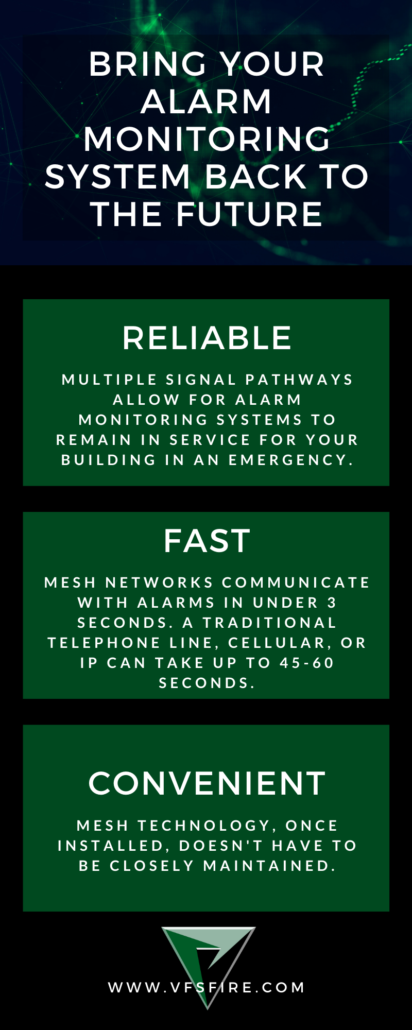
BRING YOUR ALARM MONITORING SYSTEMS BACK TO THE FUTURE

Great Scott! It’s time to bring your alarm monitoring systems back to the future. Mesh network systems are the Delorean ready to bring your systems up to speed with the times.

Choosing mesh technology to support your alarm monitoring system needs means choosing reliability, speed, and convenience. Your antiquated alarm monitoring systems just won’t cut it anymore. 

HOW CAN MESH ALARM MONITORING SYSTEMS HELP YOUR BUSINESS?

RELIABLE

Mesh network monitoring systems are unlike any tower-based, single-route systems. The mesh wireless technology is resistant to environmental disturbances and equipment problems. The multiple signal pathways allow for the alarm monitoring systems to remain in service for your building. 

FAST

Mesh networks communicate with alarms in under three seconds. A traditional telephone line, cellular, or IP can take up to 45-60 seconds. That extra time could be the difference between life and death for your employees. 

With mesh network systems, you don’t have to worry about slow or dropped connections. While cellular and IP systems slow and even sometimes drop when users are added to the systems, MeshWrx’s performance is improved. Radio mesh network technology creates multiple paths for an emergency signal to reach first responders. The self-configuration and smart routing results in 100% uptime. 

CONVENIENT 

Cellular and IP equipment requires consistent upgrades in order to ensure your technology does not become obsolete. With mesh technology, once installed, you don’t have to worry about it anymore. 

Not to mention the money you can save by installing mesh networks. Your current system may be costing you a small fortune. Monthly costs for traditional alarm monitoring systems are increasing as quality and reliability are decreasing.

Increased service calls and time spent tracking down issues are additional costs incurred with outdated systems. With MeshWrx, we eliminate the cost of expensive phone lines, don’t require upgrades, and instead provide more reliable technology.

MeshWrx alarm monitoring systems can help you protect your building when you need it most, just ask our clients! 

“Over the years we have had continued service issues and problems with our fire alarm monitoring telephone liens for our facilities in Southern California, and the cost and fees for phone lines have also increased year over year. By canceling our monthly fire alarm and security telephone lines services and going with MeshWrx monitoring, our organization is saving over $40,000 annually with superior technology, equipment, and service.” 

-Josh Harvey, Manager of Information Systems at Armstrong Garden Centers